
Semax is a synthetic peptide developed in Russia from a fragment of ACTH, a naturally occurring hormone, and the form people ask about most is semax nasal spray. In plain terms, it’s a lab-made chain of amino acids that researchers have studied for its effects on the nervous system. In Russia it has been used as a prescription medicine, but it isn’t approved as a drug in Canada or the United States, and most of the research you’ll find comes from small studies and animal work.
So why is a brewing site writing about it? Curiosity, mostly. Our readers are a thoughtful, ingredient-obsessed crowd who care about where things come from and what’s actually in them, and that same habit applies here. Plenty of you are also thinking about healthy lifestyle balance which means you run into wellness topics like this one and want a straight answer.
This overview sticks to what the research says, who says it, and where the evidence runs thin. Nothing here is medical advice, dosing guidance, or a recommendation.
What Semax Means: A Plain-Language Definition

Semax is a short synthetic peptide, which means a small chain of amino acids built in a lab rather than extracted from nature. Its sequence is related to a fragment of ACTH (adrenocorticotropic hormone), a hormone the body already makes, with a small added sequence meant to help it hold up longer once it’s in the body.
If you’ve ever mashed in, you already know the idea. Big, complex proteins in your grain get broken down into smaller chains and building blocks that yeast can work with. A peptide sits in that in-between space: smaller than a full protein, but still a precisely ordered chain whose structure matters.
Semax came out of research in Russia, where it has approved clinical use alongside a few neighboring countries. That’s the part worth stating plainly: it is not approved as a medication by the U.S. FDA or by most Western regulators. Much of what’s been published comes from Russian research groups, so it’s best read as an interesting body of work rather than settled, widely replicated science.
Research summaries lean on some specialized vocabulary, so here’s a quick glossary:
- Peptide
- A short chain of amino acids, smaller than a full protein.
- ACTH fragment
- A piece of the sequence of adrenocorticotropic hormone, which serves as the structural starting point for Semax.
- Neuropeptide
- A peptide that nerve cells use to signal and communicate.
- BDNF
- Brain-derived neurotrophic factor, a protein studied for its role in supporting nerve cell growth and survival.
- Intranasal delivery
- Administration through the nose, typically as a spray, rather than by mouth.
Keep these terms handy, because they’ll come up again as we look at how researchers think Semax works.
How Semax Is Thought to Work in the Body
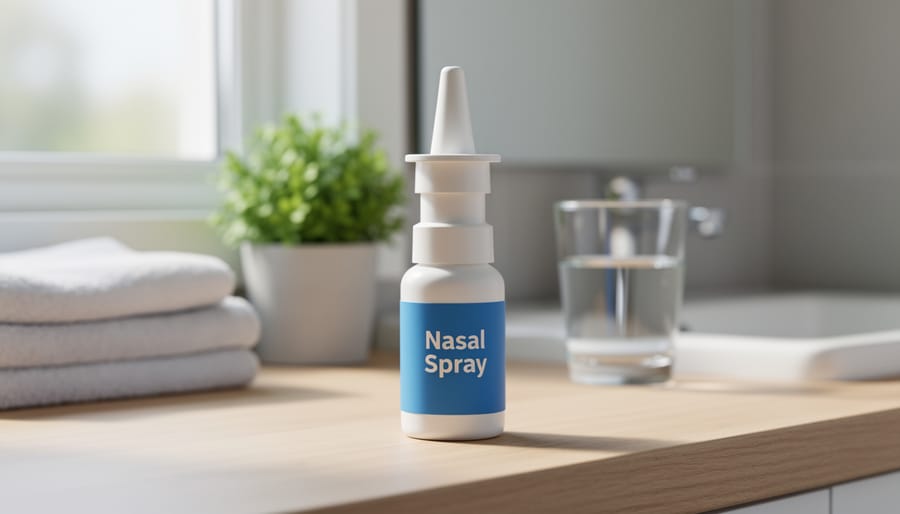
Anyone who has watched a brewer pick the right delivery method for a delicate ingredient, say a late hop addition to protect volatile aromatics, will recognize the logic behind Semax’s nasal route. Peptides are fragile. Swallowed, they would largely be broken down by digestive enzymes before doing anything, so Semax is given intranasally, where the nasal mucosa offers a more direct path.
Researchers have proposed several ways Semax might act, and they tend to cluster around a few themes.
The most discussed is brain-derived neurotrophic factor, or BDNF, a protein involved in the survival and growth of nerve cells. Some animal studies suggest Semax may raise BDNF expression in certain brain regions, which could help explain the neuroprotective effects reported in those models.
A second idea involves neurotransmitters. Preclinical work has pointed to possible interactions with serotonin and dopamine systems, both tied to mood, attention, and motivation. Researchers have also looked at whether the peptide influences blood vessel function and inflammatory or protective signaling after injury, though these ideas are less settled.
That distinction matters. Findings from cell cultures and rodents show what is biologically plausible, not what reliably happens in a human brain. Human studies exist, mostly small clinical studies from Russia, but they are not designed to confirm the underlying mechanisms. Researchers still debate how much of the peptide reaches the brain after nasal delivery and which of these pathways, if any, drives the effects people report.
So the honest summary is that the picture is intriguing but incomplete. As with any process we only partly understand, whether a stubborn fermentation or a new peptide, it pays to hold the explanations loosely until the evidence catches up.
What the Research Has Explored: Uses and Areas of Study

When people ask what Semax has actually been studied for, the honest answer is “a handful of things, with uneven evidence behind each.” Here’s a quick map of the main areas, followed by what to keep in mind when reading them.
- Recovery after ischemic stroke: studied mostly in Russian clinical settings, with small trials and limited independent replication.
- Cognitive performance and attention: a mix of small human studies and animal work, often short in duration.
- Optic nerve conditions: a few older clinical reports in Russia suggesting possible effects, but the sample sizes were modest.
- General neuroprotection: mostly animal and cell studies, which are useful for generating ideas but don’t confirm results in people.
Stroke recovery is the area with the longest research history. Much of it comes from Russian hospitals and institutes, where Semax has been used alongside standard care. Those reports are interesting, but many were small, some were not rigorously blinded, and few have been repeated by outside groups.
Work on cognition and attention looks at things like focus and memory under stress. Some findings point to possible effects, but the studies tend to be limited in scale, and results in animals don’t always carry over to humans. The optic nerve research follows a similar pattern: promising on paper, thin in terms of large, modern trials.
The animal and cell studies on neuroprotection are the broadest, and they’re where most of the proposed mechanisms get tested. They help researchers form hypotheses, but they’re an early step rather than a finish line.
Across all of these areas, the common thread is that large, independent trials meeting Western regulatory standards remain scarce. None of this establishes Semax as a proven or recommended option for any condition.
A quick note on reading health claims online. (Sidebar-style, since good habits travel well.) Just as a good brewer asks where the hops came from, ask where a claim came from. Look for the original study, not just a summary. Check whether it was in humans or animals, how many participants it included, and who funded it. Be wary of any source that sounds certain, sells a product, or skips the limitations. And when something affects your health, a conversation with a qualified professional beats any forum thread.
Forms, Concentrations, and What the Spray Actually Contains
In research and in the countries where it’s approved, Semax is usually presented as an intranasal solution rather than a pill or powder. Descriptions in the literature most often mention two strengths, commonly given as a 0.1% solution and a 1% solution. Which one appears depends on the study or the product, and the difference matters for how a given preparation is described, not as a prompt to try one.
You’ll also run into variations discussed in online communities, such as N-Acetyl Semax, a modified version of the peptide. Talk of it is mostly anecdotal, and the published evidence on it is thin compared with the original compound.
Formulation matters more than it might seem. A peptide is a delicate molecule, so the liquid it’s dissolved in, its acidity, and how it’s stored all affect stability and consistency from one bottle to the next. Brewers know this feeling well. Anyone who has read up on the key ingredients of a beer understands that small differences in inputs change the result, which is a big part of why ingredients matter so much and why a clear label is worth something.
That’s the catch with products sold online outside regulated channels. Purity and labeling can vary widely, and some are sold as “research chemicals,” which means no one is checking what’s actually in the bottle. That uncertainty is a real consideration, not a footnote.
Safety, Side Effects, and Regulatory Status
In the published research, Semax is generally described as well tolerated. Reports in studies mention things like nasal irritation or other mild effects, but those findings come mostly from small trials, many of them in Russian clinical settings. What we don’t have is solid long-term safety data across broad, diverse populations, and that gap matters. “Well tolerated in a study” is not the same as “proven safe for everyone.”
Regulatory status is where things get clear. Semax is approved for certain medical uses in Russia, but it is not approved by the U.S. FDA as a medication. Products sold online outside regulated channels, often labeled “research chemicals,” can vary in purity and labeling, so you can’t always know what’s actually in the bottle.
Athletes should take extra care. Anti-doping rules change, and peptides and related compounds are often scrutinized, so check current guidance with the relevant governing body, such as WADA or your sport’s federation, before assuming anything is permitted.
The same instinct that makes you read a beer label or ask a brewer about ingredients applies here: value transparency and know your source. If you have an existing condition or take other medications, talk with a qualified healthcare provider first.
Semax Nasal Spray: Common Questions Answered
If you’ve landed here with a handful of quick questions, these short answers should help. They reflect what published research and regulators say, not recommendations.
Is Semax a drug, a supplement, or something else?
It’s a synthetic peptide. In Russia it has been approved as a medicine for certain uses, while elsewhere it’s often sold online as a “research chemical,” which is a murky category rather than a regulated one.
Is Semax legal in the United States?
It isn’t FDA-approved as a medication, and its legal footing for sale as a consumer product is unclear. Rules differ by country and can change, so check current guidance and ask a qualified professional.
Is Semax the same as ACTH?
No. It’s modeled on a small fragment of ACTH, with an added sequence for stability, but it’s a distinct compound and isn’t generally described as acting like the full hormone.
How strong is the human evidence?
It’s uneven. Much of it comes from smaller, older, regionally concentrated studies, and large independent trials meeting Western regulatory standards are limited.
As for how it compares with other nootropics, that’s hard to say cleanly. Semax is a peptide delivered through the nose, while many popular nootropics are small molecules or plant extracts taken by mouth, and the research behind each varies widely in depth.
When you go looking for reliable information, start with primary sources. Search peer-reviewed databases like PubMed, read the study itself rather than a summary on a retail page, and check who funded it and how many people took part. Be wary of any site selling the product while also telling you what it does.
It’s the same habit that serves you well at the taproom. Just as we like clear, honest numbers in our own favorite guides, like these FAQs about calories good questions deserve plain answers and transparent sourcing.
So, what is Semax nasal spray? It’s a synthetic peptide, delivered through the nose, that researchers have studied for its effects on the brain and nervous system. The research record is interesting but uneven. The strongest work comes from Russian clinical settings, while large, independent trials that meet Western regulatory standards remain scarce. That gap matters, and it’s the honest place to leave the story.
Brewers know this feeling well. A great pint rewards curiosity, careful sourcing, and the habit of asking questions of the people who know more than you do. Understanding any wellness topic works the same way. It starts with good information and a clear view of its limits.
If Semax has caught your attention, read the primary research yourself rather than relying on secondhand claims. Then talk with a qualified healthcare professional about anything that touches your own health. And when you’re back at the bar or around the homebrew table, bring that same thoughtful curiosity to your next pour, and share what you learn with the people beside you.