Trends in craft beer describe the evolving directions, styles, ingredients, and cultural movements shaping what brewers make and what drinkers seek out at any given time. These patterns emerge from a blend of brewer creativity, consumer curiosity, ingredient availability, and broader cultural shifts around sustainability and community connection.
Understanding these trends matters because they signal where the craft beer landscape is headed and help you discover what’s fresh, exciting, and worth exploring right now. Whether you’re looking to expand your tasting horizons, support local innovation, or dial in your next homebrew recipe, knowing which trends are gaining momentum gives you context for the beers lining tap walls and bottle shop shelves.
The craft beer world never stands still. What counts as cutting-edge changes as brewers push boundaries, consumers vote with their wallets, and the industry responds to environmental and economic pressures. Some trends surge and fade within a year or two. Others settle in and reshape the category permanently, the way hazy IPAs transformed expectations around hop-forward beers or barrel-aging became standard practice at quality-focused breweries.
This article breaks down what drives trends in craft brewing, how they spread from experimental batches to widespread adoption, and the major categories reshaping taprooms and bottle lineups today. You’ll see how small-batch experiments at neighborhood breweries can ripple outward to influence national conversations, and why certain flavor profiles or production methods capture attention while others quietly fade. By the end, you’ll have a clearer read on the forces moving craft beer forward and the practical insights to navigate your next brewery visit or recipe planning session with confidence.
What Craft Beer Trends Really Mean for the Industry
In craft brewing, a trend represents a sustained shift in how beer is made, served, or experienced, something that fundamentally changes industry practices rather than simply generating temporary buzz. Unlike a fad that burns bright and fades within a season or two, genuine trends reshape brewery operations, influence purchasing decisions across multiple market cycles, and become woven into the broader culture of craft beer.
The distinction matters because craft brewing has weathered plenty of flash-in-the-pan moments. That one-off peanut butter bacon stout that grabbed headlines last month? Probably a fad. The steady march toward hop-forward lagers that’s been building momentum for three years and now anchors taproom lineups from Portland to Philadelphia? That’s a trend worth watching.
- Trend
- A sustained directional shift in brewing practices, consumer preferences, or business models that persists across multiple seasons and influences industry-wide behavior.
- Fad
- A short-lived spike in interest around a specific beer style, ingredient, or concept that generates buzz but fails to achieve lasting market adoption or operational integration.
- Innovation Cycle
- The process by which experimental brewing ideas move from small-batch trials through taproom testing to wider distribution and potential industry adoption.
- Market Adoption
- The stage at which a brewing innovation transitions from novelty to standard practice, appearing regularly on draft lists and influencing production planning.
Trends emerge from the intersection of three forces: brewer creativity pushing technical boundaries, consumer curiosity driving demand for new experiences, and cultural movements that position certain values, sustainability, authenticity, community connection, as essential rather than optional. When a local brewery experiments with spontaneous fermentation and their regulars respond enthusiastically, that’s interesting. When dozens of breweries across the country start building coolship programs and consumers begin seeking out these beers specifically, you’re watching a trend take shape.
The craft landscape has evolved from the early days when simply existing as an alternative to macro lagers was revolutionary. Today’s trends reflect a maturing industry where innovation happens at every level, ingredient sourcing, fermentation science, business models, environmental practices, and where brewers actively shape consumer expectations rather than merely responding to them. Change today is driven by collaboration, transparency, and a willingness to challenge assumptions about what beer can be and how it fits into people’s lives.
How Craft Beer Trends Emerge and Spread
The Brewer-to-Consumer Innovation Pipeline
Small-batch experimentation sits at the heart of craft brewing innovation. Most trends begin with a brewer’s curiosity, a new hop variety arriving at the loading dock, a conversation with a local farmer about heritage wheat, or simply wondering “what if we tried this?” These experimental batches often start as single-barrel projects or pilot system runs, brewed in quantities measured in gallons rather than barrels.
When something works, it typically graduates to the taproom as a limited release. This stage serves as real-time market research, where brewers gauge reactions directly from the people drinking their beer. Taproom regulars become informal focus groups, offering immediate feedback that shapes whether an experiment becomes a regular offering. A brewer in Portland might test a spontaneously fermented farmhouse ale on draft for two weeks, watching how quickly it sells and listening to customer comments before deciding whether to scale up production.
The path from taproom exclusive to wider distribution depends on sustained interest and production capacity. Some innovations remain purposefully small, barrel-aged projects or wild fermentation programs that can’t be rushed or easily scaled. Others, like a well-received hazy IPA or a sessionable lager, might move into cans within months if demand justifies the investment in packaging runs and distribution logistics.
Throughout this pipeline, collaboration accelerates adoption. When brewers share techniques at industry events or through social media, a single brewery’s experiment can inspire dozens of variations across the country within weeks.
Regional Influence and Cross-Pollination
Craft beer’s regional character has always defined the industry, yet today’s trends rarely stay contained within geographic boundaries. A technique perfected in Vermont’s hop labs appears months later in Colorado taprooms; San Diego’s barrel-aging experiments inspire Melbourne breweries; Portland’s mixed-culture innovations influence brewers in Asheville. This cross-pollination happens faster than ever, driven by brewer mobility, competition travel, and real-time social media sharing from brewhouse floors.
Regional brewing cultures still maintain distinct identities, the Pacific Northwest’s hop obsession, the Midwest’s lager precision, New England’s haze revolution, but these traditions now inform rather than limit each other. Brewers relocate, bringing their regional expertise to new markets. Collaboration brews between distant breweries create hybrid styles that blend geographic sensibilities. Festival circuits and industry conferences turn regional innovations into national conversations within weeks.
The result is a craft beer landscape where local character coexists with rapid trend diffusion, creating beers that honor tradition while embracing techniques from thousands of miles away.
Major Categories of Craft Beer Trends in 2026
The craft beer landscape in 2026 is being reshaped by five interconnected forces, each responding to both brewer creativity and shifting consumer priorities. Despite challenges reflected in the Canada beer sales decline and US beer sales data innovation continues to accelerate across distinct categories.
First, brewing technique evolution is driving entirely new flavor possibilities through fermentation science, water chemistry manipulation, and process refinement. Second, flavor profile experimentation pushes beyond established style boundaries, blending traditions and inventing new taste territories. Third, ingredient sourcing trends emphasize provenance and locality, with brewers partnering directly with farmers and maltsters to create distinctive regional expressions.
Fourth, sustainability practices have moved from optional ethos to operational imperative, encompassing everything from water recapture systems to carbon accounting. Finally, business model innovation is redefining how breweries connect with customers, moving beyond the simple transaction of selling pints to building membership communities and immersive brand experiences.
These categories overlap and reinforce each other. A brewery investing in local grain sourcing simultaneously addresses ingredient trends, sustainability goals, and creates compelling stories for their taproom experience. Understanding these interconnections reveals how craft brewing continues to evolve as both art and enterprise.
Flavor and Style Innovation Trends
Hoppy Beer Evolution Beyond the IPA
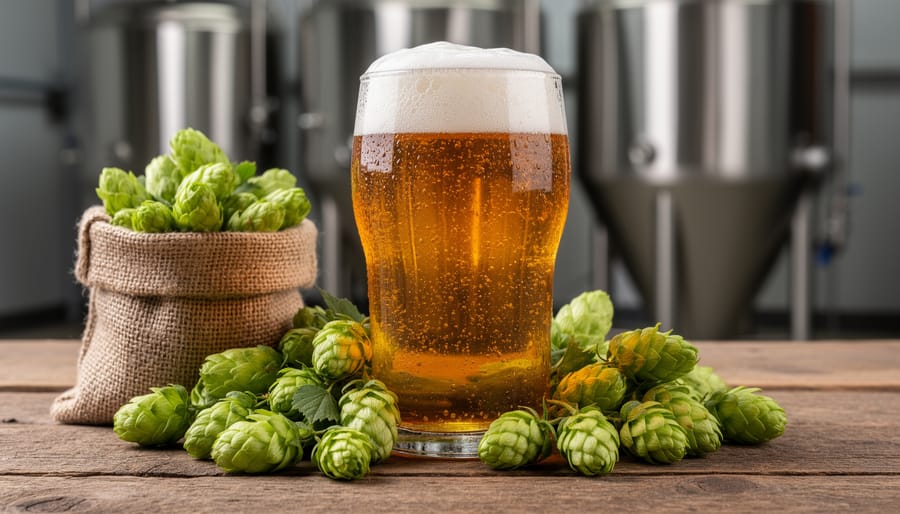
Hop-forward brewing has broken free from IPA dominance, with brewers channeling aromatic hop character into unexpected vessels. Cold IPA hybrids pair crisp lager fermentation with intense dry-hopping, delivering both clean finish and citrus punch. Some breweries push further, crafting hop-forward pilsners and kölsch that let delicate malt shine through layers of Mosaic or Hallertau Blanc.
Hop water represents the frontier’s oddball success, zero-calorie, zero-alcohol beverages built entirely on hop aromatics. Originally a homebrewer curiosity, these sparkling hop teas now occupy cooler space at health-conscious taprooms, proving hops can carry a product without fermentation.
Novel hop varieties drive much of this expansion. Experimental cultivars like Strata, Sabro, and Nectaron offer flavor profiles (coconut, stone fruit, tropical candy) that older American C-hops never touched. Brewers pair these with non-IPA templates, discovering that hop complexity enhances rather than overwhelms lighter styles.
This diversification matters because it broadens who enjoys hop-forward beer. A Galaxy-hopped lager might convert the “I don’t like IPAs” crowd, while hop water reaches athletes and sober-curious drinkers. The hop itself remains the star, just playing different roles across a wider stage.
The Return of Traditional Styles with Modern Twists
The craft beer pendulum has swung decisively toward restraint and drinkability. After years of imperial stouts and triple IPAs, brewers are finding creative expression in styles their grandparents would recognize, just executed with modern knowledge and local character.
Pilsners and lagers now occupy prominent taproom positions once reserved for hazies. These aren’t afterthought offerings. Brewers are investing in temperature-controlled fermentation, extended lagering times, and decoction mashing to achieve the crisp, delicate profiles these styles demand. The difference? They’re using regional malt from nearby maltsters and experimenting with single-hop expressions to showcase specific varieties.
Kölsch, gose, and Czech-style pale lagers are getting similar treatment. A Minneapolis brewery might lager a traditional Czech pilsner for eight weeks but build the grain bill entirely from Upper Midwest heritage barley. West Coast brewers are producing Italian pilsners with California-grown hops, creating a bridge between old-world elegance and new-world terroir.
This renaissance reflects both brewer skill and drinker sophistication. Making a clean lager requires technical precision that hides nothing. When done right, these beers demonstrate that tradition and innovation aren’t opposing forces, they’re collaborators.
Wild and Mixed-Culture Fermentation
Wild and mixed-culture fermentation has moved from fringe curiosity to serious craft, with breweries developing multi-year aging programs and dedicated coolship facilities. The approach centers on embracing unpredictability, inoculating wort with ambient yeast and bacteria or pitching specific Brettanomyces strains alongside traditional cultures to create layered complexity that evolves over months or years.
What’s changed is the sophistication. Rather than hoping for happy accidents, brewers are studying their house microflora, isolating specific wild strains from fruit skins or barrel staves, and building blending libraries where dozens of barrels age at different rates. Some maintain permanent cultures passed down through generations of batches, creating house character as distinctive as any terroir-driven wine.
The patient work shows in beers with striking depth, stone fruit esters, barnyard funk, bright acidity, champagne-like effervescence, that can’t be rushed. Smaller producers are collaborating on blending projects, pooling barrels to create one-off releases that showcase regional wild yeast profiles. It’s fermentation as slow craft, where the brewer becomes curator as much as creator, tending living beer that writes its own story.
Ingredient and Sourcing Trends
Hyper-Local Ingredient Sourcing
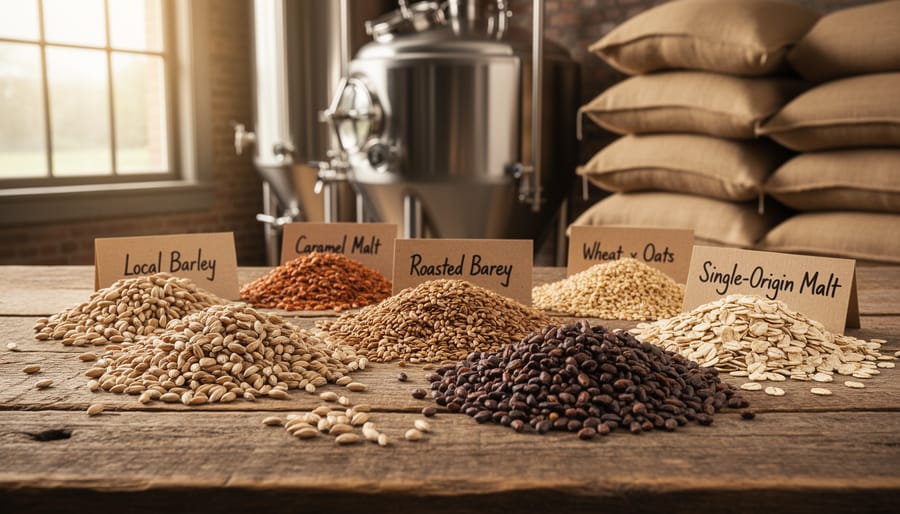
The bond between craft breweries and their local agricultural communities has never been stronger. Across the country, brewers are forging direct partnerships with farmers, maltsters, and hop growers within their own regions, sometimes within a few miles of the brewhouse, to create beers that genuinely express a sense of place.
Take a brewery in Vermont that sources spent grain from a neighboring malt house, then returns it as cattle feed to the same farms supplying their barley. Or a Pacific Northwest operation collaborating with a hop yard to develop proprietary varieties exclusive to their taproom releases. These relationships go beyond ingredient procurement; they’re about shared investment in local economies and agricultural resilience.
The results show up in the glass. A lager brewed entirely with estate-grown malt tastes different from one made with commodity grain, there’s texture, character, terroir. Brewers now list farm names on their labels the way winemakers do, celebrating the people and land behind each batch.
For consumers, these partnerships offer transparency and connection. You’re not just buying a beer; you’re supporting an entire web of local artisans working together to build something meaningful in their community.
Heritage Grains and Specialty Malts
The craft malt revolution has quietly transformed how brewers think about their foundation ingredient. While hops grab headlines, a growing network of regional maltsters is reintroducing grains that commercial brewing left behind decades ago, heritage wheat varieties like Red Fife and Turkey Red, heirloom barleys such as Maris Otter and Golden Promise, and ancient grains like emmer and spelt.
These specialty malts deliver flavor complexity that commodity malt can’t match. A pilsner brewed with estate-grown barley from a craft malthouse tastes noticeably different from one made with generic two-row, richer, with more pronounced grain character and terroir-driven nuances that reflect the soil and climate where it grew. Brewers are discovering that malt choice impacts beer flavor as significantly as hop selection does.
The movement parallels what happened in bread baking, with small-scale maltsters working directly with farmers to grow specific varieties and using traditional floor-malting techniques that allow for greater control and character development. For brewers, the benefit extends beyond flavor: these partnerships create compelling origin stories and support local agriculture. A saison brewed with wheat grown 30 miles away and malted by hand tells a story that resonates with today’s craft beer audience, who increasingly want to know exactly where their beer comes from.
Sustainability and Environmental Innovation
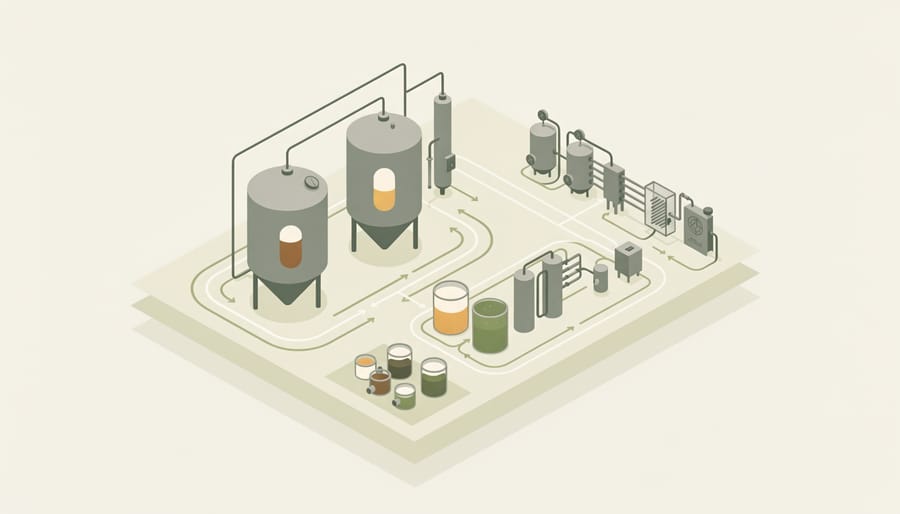
Environmental responsibility has moved from occasional talking point to operational imperative across craft brewing. What started as isolated efforts by a few pioneering breweries has evolved into comprehensive sustainability programs that touch every aspect of production, from raw materials to packaging waste. Breweries are treating resource conservation not as a marketing angle but as fundamental to their long-term viability, driven by both genuine environmental commitment and economic necessity as water and energy costs rise.
Water efficiency represents perhaps the most critical focus area. Traditional brewing uses seven to ten gallons of water for every gallon of beer produced, but innovative breweries are dramatically reducing this ratio through closed-loop systems that capture, treat, and recycle process water. Some operations have achieved ratios as low as three-to-one by implementing heat recovery systems that reuse hot water from cooling processes and investing in advanced filtration that returns cleaned water to early brewing stages. The behind-the-scenes reality involves significant capital investment in treatment infrastructure, but breweries in water-stressed regions increasingly view it as non-negotiable.
Spent grain, the barley and wheat leftover after mashing, presents both challenge and opportunity. Rather than sending tons of wet grain to landfills, breweries are partnering with local farms for animal feed, working with bakeries to incorporate grain into bread and crackers, or even developing in-house upcycling programs. Some forward-thinking operations are exploring spent grain as a renewable energy source through anaerobic digestion systems that convert organic waste into biogas for heating.
Energy consumption in brewing is substantial, particularly during boiling and temperature-controlled fermentation. The shift toward renewable energy is accelerating:
– Closed-loop water reclamation systems that cut usage by 40-60% compared to industry averages
– Spent grain partnerships with farms, bakeries, and renewable energy facilities for complete waste diversion
– Solar panel installations and wind power contracts to offset grid electricity consumption
– Carbon offset programs through reforestation partnerships and renewable energy credits
– Compostable four-pack rings, can toppers, and shipping materials replacing plastic packaging
Regenerative agriculture partnerships represent the most ambitious sustainability trend. Breweries are working directly with hop and barley farmers implementing soil health practices, cover cropping, minimal tillage, diverse rotations, that actually sequester carbon while producing brewing ingredients. These relationships go beyond simple sourcing contracts to long-term commitments that support farmers transitioning to regenerative methods, creating a supply chain that improves rather than degrades ecosystems. Some breweries have launched dedicated beer lines that highlight regeneratively-grown ingredients, educating consumers about agriculture’s role in climate solutions and creating market incentives for better farming practices.
Business Model and Consumer Experience Trends
Experiential Taprooms and Community Hubs
Craft breweries in 2026 are transforming their taprooms into genuine gathering places where the beer is just one part of a larger community experience. Forward-thinking breweries now host curated events, from vinyl listening nights and trivia leagues to educational brewing workshops where customers mill grain alongside the brewing team. Food has evolved beyond typical pub fare through partnerships with local kitchens, pop-up collaborations with nearby restaurants, and on-site food halls that showcase regional culinary talent.
Many taprooms double as event venues, hosting everything from farmers markets and art exhibitions to celebrations like Canadian Beer Day that bring the wider community together. Some breweries have built outdoor spaces with bocce courts, fire pits, and dog-friendly patios that encourage longer visits and repeat customers. Educational programming, guided tastings, ingredient showcases, homebrewing demonstrations, deepens customer appreciation while building loyalty beyond the transaction. The most successful taprooms feel less like retail spaces and more like neighborhood living rooms where relationships form over carefully crafted pints.
Direct Relationships and Membership Models
Membership programs have become a cornerstone of brewery sustainability, transforming occasional visitors into invested community members. Beer clubs typically offer tiered benefits, early access to limited releases, members-only bottle shares, discounts on merchandise, and invitations to special events. These recurring revenue streams help breweries forecast production and weather seasonal fluctuations while building a core supporter base.
Digital platforms amplify these relationships beyond physical taproom visits. Breweries now use apps and online portals where members track their tastings, pre-order upcoming releases, and connect with other enthusiasts. Some forward-thinking operations offer virtual brewery tours, live-streamed brew days, and behind-the-scenes content that deepens member engagement between visits.
The exclusivity factor drives participation. Barrel-aged stouts, anniversary brews, and experimental small-batch projects often release to club members first, creating genuine value beyond simple discounts. Many breweries report that members account for 30-40% of their taproom revenue despite representing a smaller percentage of total visitors, demonstrating how direct relationships concentrate spending among the most passionate fans.
How Craft Beer Trends Are Applied Across the Industry
Craft beer trends don’t land uniformly across the industry. A nanobrewery in rural Alberta interprets sustainability differently than a 50,000-barrel operation in Vancouver. The small-batch producer might focus on hyper-local ingredient partnerships with a single nearby farm, while the established regional invests in wastewater treatment systems and renewable energy infrastructure. Both pursue the same trend, scaled to their operational reality.
Urban breweries typically chase flavor innovation faster, experimenting with trending adjuncts and barrel-aging programs because their customer base craves novelty and their taproom traffic supports experimental one-offs. Rural breweries often adopt trends more deliberately, emphasizing ingredient sourcing stories and community connection over sheer variety. A countryside brewpub might feature heritage grains from a neighboring maltster as its signature trend application, turning regional agriculture into a compelling narrative.
Contract brewing has become an unexpected trend incubator. Gypsy brewers and emerging brands use established facilities to test boundary-pushing concepts without capital investment, often bringing fresh perspectives that influence their host brewery’s thinking. This cross-pollination accelerates how trends spread from experimental to mainstream.
Homebrewers remain the industry’s research and development engine. An enthusiast attempting a mixed-culture fermentation in their basement or incorporating foraged ingredients into their first homebrew batch often previews what commercial breweries will explore next. Homebrew clubs and competitions function as proving grounds where techniques get refined before scaling up.
Even regulatory environments shape trend adoption. Markets with evolving legislation, like navigating the Quebec drinking age framework for brewery taproom service, see different business model innovations than jurisdictions with mature craft beer laws. The trend is universal, but the application reflects local context.
What These Trends Mean for Beer Lovers and Brewers
For beer lovers, these shifts translate into richer, more diverse taproom visits and bottle shop discoveries. You’ll encounter more sessionable lagers with European precision alongside funky wild ales that showcase a brewer’s patience and skill. Expect transparent ingredient sourcing to become standard, labels will tell you which farm grew the barley, which hop yard supplied the cones. When visiting your local brewery, ask about their sustainability initiatives and upcoming experimental batches; most brewers love discussing what they’re working on. The experiential taproom trend means your neighborhood brewery might host grain-to-glass dinners, brewing workshops, or collaborative events that deepen your connection to the craft.
How can I find these trending beers?
Follow your local breweries on social media for taproom-exclusive releases, join brewery membership programs for early access, and ask taproom staff what experimental batches they’re pouring. Many trends start locally before reaching wider distribution.
Are these trends just fads?
The most enduring trends, like sustainability practices and quality lagers, address fundamental shifts in consumer values and brewing philosophy. Flavor experiments may come and go, but the underlying commitment to innovation and community remains constant.
What should homebrewers try first?
Start with clean lager techniques to build foundational skills, then experiment with single-hop beers to understand modern hop varieties. Heritage grains and local ingredient sourcing offer accessible ways to mirror professional trends at home.
How do I support innovative local breweries?
Visit their taprooms regularly, engage with their community events, provide feedback on experimental beers, and spread the word about releases you enjoy. Direct relationships matter more than ever to small producers.
Homebrewers have unprecedented opportunities to experiment alongside professionals. The techniques driving these trends, whether hop-forward lagers, mixed fermentation, or heritage grain exploration, are accessible at any scale. Start small: brew a classic pilsner with meticulous temperature control, source malt from a regional maltster, or try a single brett strain in a secondary fermenter. Online communities and local homebrew clubs share knowledge faster than ever, meaning you can attempt cutting-edge methods within weeks of seeing them at commercial breweries. The barrier between amateur and professional continues to blur, with many of tomorrow’s brewery owners currently brewing in their garages today.
The evolution of craft beer in 2026 reflects something larger than shifting flavor profiles or brewing techniques, it represents a community’s ongoing conversation about quality, creativity, and connection. Every trend we’ve explored, from hyper-local ingredient sourcing to zero-waste initiatives, carries the fingerprints of brewers who care deeply about their craft and the people who drink it.
What makes this moment particularly exciting isn’t just the innovation happening in fermentation tanks and barrel rooms. It’s how accessible that innovation has become. Your neighborhood brewery is likely experimenting with heritage grains, testing mixed-culture fermentation, or partnering with local farms to create something genuinely unique to your region. These aren’t distant industry movements, they’re happening right now at taprooms within driving distance.
The brewers pushing these boundaries aren’t chasing trends for their own sake. They’re responding to a community that values transparency, sustainability, and authenticity. They’re taking risks on unconventional ingredients because you’ve shown up to try their latest experimental batch. They’re investing in expensive sustainability measures because it matters to the people who support them.
So explore what’s happening in your local brewing scene. Ask your bartender about that unfamiliar ingredient. Try the beer made with grain from twenty miles away. Visit during a barrel-aging event. The craft beer landscape keeps evolving because people like you show up curious, engaged, and ready to taste what’s next.