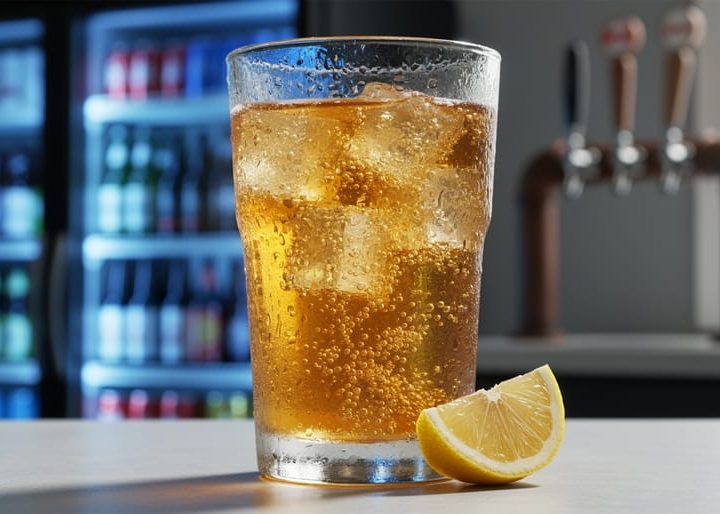
No, Canada Dry is not beer. It’s a ginger ale, a sweet, carbonated soft drink that’s been around since 1904. The “Dry” in its name refers to the crisp, less sweet flavor profile compared to other sodas of that era, not to any brewing process or alcoholic content.
The confusion is understandable. The word “dry” carries weight in brewing circles, describing everything from dry-hopped IPAs to crisp lagers, and the Canadian connection might lead some to assume a link to our country’s rich beer heritage. But Canada Dry’s story is one of soft drink innovation, not craft brewing tradition.
This mix-up offers a perfect opportunity to explore what makes Canadian beer genuinely Canadian, especially as we approach Canadian Beer Day celebrations. While Canada Dry may share shelf space with beer coolers at the grocery store, the two beverages couldn’t be more different in production, ingredients, or culture.
Real Canadian beer tells a story of local grain, water chemistry, yeast strains adapted to our climate, and brewers who’ve turned regional ingredients into distinctive flavors. From coast to coast, our craft brewing community has built something remarkable, drawing on centuries-old techniques while pushing boundaries with new hop varieties and barrel-aging programs.
Understanding the distinction between a mass-produced soft drink and authentic beer matters. It helps us appreciate the craft, science, and community behind every pint poured at your local taproom, and it reminds us why supporting real breweries means investing in the people and traditions that define Canadian brewing culture.
The Canada Dry Mystery: Why People Think It’s Beer
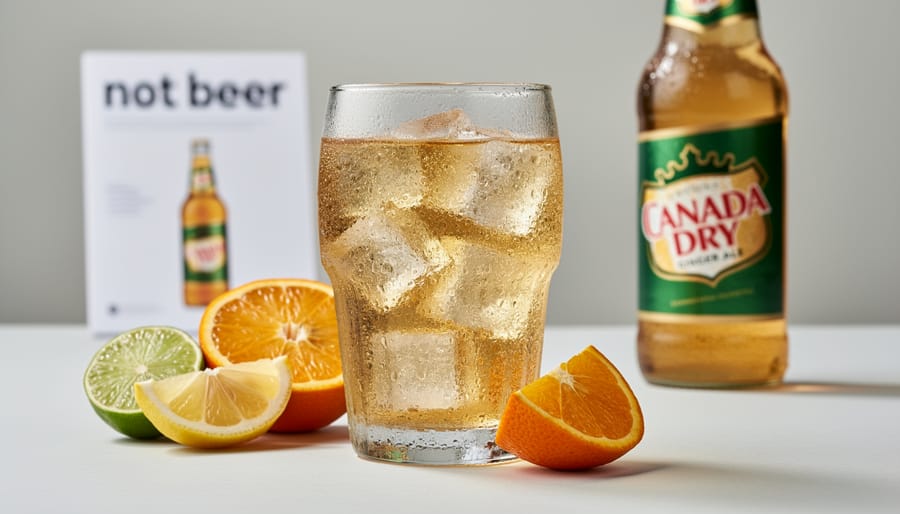
The name alone causes half the confusion. “Canada Dry” sounds like it could be a beer style, similar to how we describe IPAs as “dry-hopped” or stouts as “Irish dry.” The word “dry” carries serious brewing weight, referring to beers with minimal residual sweetness and crisp finishes. When people hear “Canada Dry” in a bar context, their brain often files it under alcoholic beverages without a second thought.
Then there’s that legendary tagline: “The Champagne of Ginger Ales.” McLaughlin’s marketing genius created an association with celebratory drinking that’s lasted over a century. The bubbles, the elegant bottle design, and the champagne comparison all suggested something more sophisticated than a simple soft drink. Early advertisements featured Canada Dry at dinner parties and upscale gatherings where alcohol flowed freely, blurring the lines between beverage categories.
Several factors contribute to this persistent misconception:
- The brand appears on bar guns and back bars alongside alcoholic mixers
- “Dry” terminology overlaps with brewing vocabulary (dry gin, dry vermouth, dry-hopped beers)
- Canada Dry’s frequent use in cocktails creates guilt by association
- The vintage advertising aesthetic mirrors beer and spirits marketing from the same era
- Some countries produce alcoholic ginger beers, adding international confusion
Search data reveals the confusion remains surprisingly common. Thousands search “is Canada Dry alcoholic” monthly, and many assume anything called “ginger beer” contains alcohol, unlike “ginger ale.” The terminology itself creates a trap. While traditional ginger beer was indeed fermented and mildly alcoholic, commercial ginger ales like Canada Dry never were.
The bar setting doesn’t help. Walk into any pub and you’ll spot Canada Dry beside the tonic water, cola, and other mixers. It’s poured from the same guns that dispense alcoholic beverages, served in identical glasses, and often costs nearly as much as a beer. That context alone convinces some first-time visitors they’re ordering something with a kick.
What Canada Dry Actually Is: A Toronto Invention

The story begins not in a brewery, but in a Toronto pharmacy on Sherbourne Street. Pharmacist John J. McLaughlin spent years experimenting with ginger extracts and carbonation in his back room, determined to craft a ginger ale that was lighter and less sweet than the heavy, syrupy versions dominating the market. His breakthrough, created in 1904 delivered a crisp, pale beverage with a distinctive bite, what he’d eventually market as “The Champagne of Ginger Ales.”
That champagne comparison wasn’t accidental flattery. McLaughlin borrowed carbonation techniques from European sparkling wine production, forcing carbon dioxide under pressure to create those signature fine bubbles. Unlike beer, which generates carbonation naturally through yeast fermentation, Canada Dry achieved its fizz through mechanical injection, the same process used in modern soft drinks. The base was simple: filtered water, real ginger extract, sugar, citric acid, and natural flavours. No malt. No hops. No yeast fermentation. Just pressurized carbonation in glass bottles that required specialized equipment and careful handling.
The “dry” in the name referenced the reduced sweetness compared to competitors, not any connection to beer terminology. McLaughlin’s formula used roughly 30 percent less sugar than traditional ginger ales, allowing the ginger’s spicy notes to shine through without the cloying finish. This lighter profile made it a revelation in an era when most carbonated drinks tasted like liquid candy.
Early production required serious mechanical know-how. McLaughlin’s operation used hand-operated carbonators and crown cap machines imported from the United States, technology that paralleled brewing equipment but served entirely different chemistry. Workers would syrup-rinse bottles, fill them with the ginger mixture, then carefully carbonate and seal each one under pressure. The slightest leak meant flat product, and explosions from over-carbonated bottles weren’t uncommon in those early days.
By 1907, demand pushed McLaughlin to move from his pharmacy basement to a dedicated production facility. The brand’s success came from genuine innovation in carbonation control and flavour balance, not from any confusion with alcoholic beverages. McLaughlin had created something entirely new: a sophisticated soft drink that elevated carbonated beverages from simple soda fountain treats to products worthy of elegant glassware and refined occasions.
The Real Canadian Beer Story: What We’re Actually Celebrating
From Prohibition to Craft: Canadian Brewing Evolution
Canadian brewing survived prohibition through clever adaptations that would shape the industry for decades. While many American breweries shut down between 1920 and 1933, Canadian provinces enacted their own temperance laws at different times, creating a patchwork regulatory landscape. Ontario’s Temperance Act of 1916, for example, allowed “near beer” with minimal alcohol content, pushing brewers to innovate with low-alcohol products and non-alcoholic beverages. This era saw established breweries like Labatt’s and Molson diversifying into soft drinks and malted products, maintaining their facilities and expertise until full brewing could resume.
The post-prohibition period consolidated Canadian brewing into a handful of large operations, but the seeds of change were planted in the 1980s. Horseshoe Bay Brewing in Vancouver, founded in 1982, is often credited as Canada’s first modern microbrewery, sparking a movement that would transform the national beer landscape. By the 1990s, provincial regulations loosened, allowing small-scale producers to sell directly to consumers through taprooms and brewpubs.
Today’s craft brewing renaissance represents a return to brewing’s community roots, with over 1,000 craft breweries operating nationwide. This Canadian Beer Day, beer enthusiasts can explore regional styles that reflect local ingredients and traditions, learning how to celebrate authentic brewing heritage rather than settling for misconceptions about ginger ale.
Regional Brewing Traditions Worth Toasting
Canada’s brewing landscape reflects its geography, with each region developing distinct traditions worth exploring beyond any ginger ale confusion.
Quebec leads the craft renaissance with farmhouse ales and experimental saisons that draw on French brewing heritage. Small-batch breweries in Montreal and beyond create wild fermented beers using local ingredients, think maple, berries, and heritage grains. These brewers often age their creations in wine barrels, bridging Old World techniques with New World innovation.
British Columbia’s brewing scene embraces the Pacific Northwest’s hop-forward tradition. Craft breweries here produce intensely aromatic IPAs showcasing Cascade, Chinook, and locally-grown varietals. The province’s mild climate supports year-round brewing experimentation, from hazy New England styles to crisp West Coast classics that balance bitter and citrus notes.
The Maritimes maintain connections to traditional English and Irish brewing. Robust stouts, amber ales, and session beers dominate tap lists, often incorporating local seafood and coastal ingredients. These breweries emphasize approachable, food-friendly beers that reflect fishing village hospitality and Celtic brewing roots.
Prairie brewers innovate with wheat, barley, and rye grown in their own backyards. Saskatchewan and Manitoba craft brewers create distinctive lagers and wheat beers using grain they can trace to specific fields. Alberta’s scene balances mountain-town creativity with agricultural practicality, producing everything from crisp pilsners to bold imperial stouts. Understanding these regional timing and traditions reveals why Canadian Beer Day celebrates such diverse brewing heritage, each region contributes unique flavours shaped by local ingredients, climate, and cultural influences.
When Ginger Ale Meets Brewing: The Shandy Connection
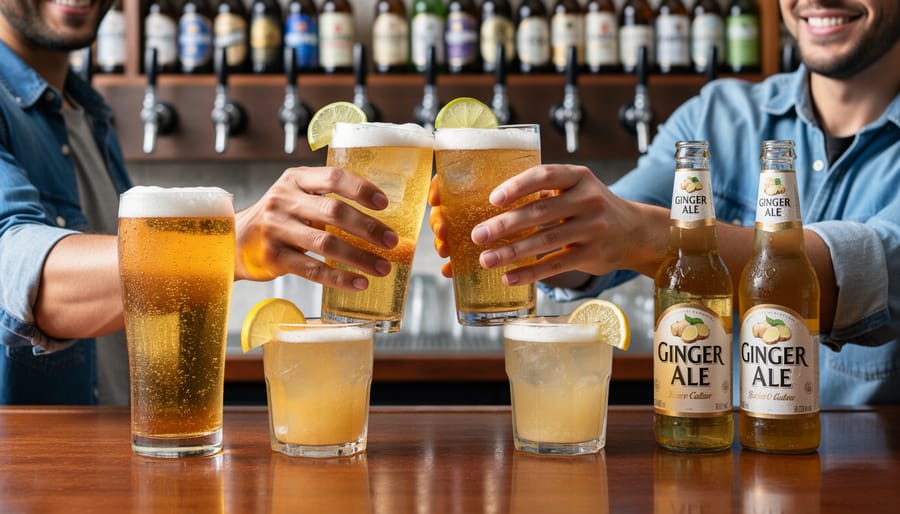
While Canada Dry itself isn’t beer, it has earned a permanent spot in beer culture through a family of refreshing mixed drinks that bridge the gap between brewing and carbonated beverages. Once you reach the legal drinking age you can explore how ginger ale transforms beer into something completely different.
- Shandy
- A traditional British-style beer cocktail made by mixing beer (typically a lager or wheat beer) with lemonade or ginger ale in roughly equal proportions. The result is a lighter, more refreshing drink with lower alcohol content.
- Radler
- The German cousin of the shandy, originally created for cyclists, mixing beer with citrus soda or lemonade. Modern craft versions often incorporate ginger ale for a spicier kick.
- Ginger Beer vs. Ginger Ale
- Ginger beer is traditionally fermented and brewed with active yeast cultures, containing trace alcohol and stronger ginger flavour. Ginger ale like Canada Dry is carbonated soft drink made with ginger flavouring, no fermentation involved.
- Craft Ginger Beer
- Small-batch fermented ginger beverages created by breweries using real ginger root, brewing yeast, and traditional fermentation methods. These can range from non-alcoholic to several percent ABV.
The craft brewing movement has taken this connection further. Breweries across Canada are producing their own ginger beers using actual brewing processes, creating products that blur the line between soft drink and beer. These artisanal versions use fresh ginger, active fermentation, and brewing techniques to develop complex flavours far beyond what Canada Dry offers. Some brewers incorporate ginger directly into beer recipes, creating ginger-forward IPAs, ginger saisons, and ginger wheat beers that showcase the root’s aromatic qualities.
For homebrewers, adding Canada Dry to a light lager creates an instant shandy, but experimenting with craft ginger beers or brewing your own ginger-infused ales opens entirely new flavour territories. The spicy warmth of real ginger complements hoppy bitterness beautifully, while the carbonation level you’d expect from Canada Dry can be achieved through proper bottle conditioning. This is where beverage innovation meets brewing tradition, creating drinks that honour both sides of Canadian beverage history.
So no, Canada Dry isn’t beer and never was. But here’s the thing: that confusion tells us something valuable about Canadian beverage history. When John J. McLaughlin created his champagne-style ginger ale in Toronto back in 1904, he tapped into the same innovative spirit that drives craft brewers across Canada today.
Both stories share common threads. A commitment to quality ingredients. Willingness to challenge established norms. Pride in Canadian craftsmanship. McLaughlin’s carbonation techniques influenced beverage production for decades, while modern brewers continue pushing boundaries with experimental ingredients and traditional methods refined for contemporary palates.
This Canadian Beer Day, raise a glass to that inventive spirit. Seek out beers from your local breweries, the ones experimenting with wild fermentation or resurrecting historical styles. Talk to the brewers about their process. Many started in their basements with nothing but passion and a recipe, much like McLaughlin in his pharmacy.
The craft brewing renaissance happening from Victoria to St. John’s proves Canadians still know how to create exceptional beverages. We’re not just consumers of global brands. We’re innovators, community builders, storytellers who happen to brew incredible beer.
And if someone at your Canada Day gathering reaches for a Canada Dry thinking it’s beer? Share the real story. Then introduce them to an actual Canadian craft lager, ale, or stout. You’ll be passing along more than brewing knowledge. You’ll be connecting them to a living tradition of Canadian creativity that spans over a century, from that Toronto pharmacy to the taproom down your street.
That’s worth celebrating with something properly brewed.