Homebrewing and responsible online casino play share an unexpected foundation: both demand patience, budget discipline, and the kind of measured decision-making that separates casual hobbyists from those who truly thrive in their chosen pursuits. While you might play at moonbet.co for entertainment and brew beer for the craft, the mental frameworks overlap more than most realize. The brewer who meticulously tracks fermentation temperatures, follows sanitation protocols, and budgets for ingredients develops the same self-regulatory skills that responsible recreational gaming requires.
In 2026, as both craft brewing and online entertainment continue to grow, understanding how disciplined hobbies cultivate broader life skills has become increasingly relevant. Homebrewers already practice many principles that translate directly to responsible leisure: setting firm budgets before starting a project, accepting that some batches will fail despite best efforts, and engaging with communities that encourage accountability rather than excess. These aren’t abstract virtues. They’re practical habits forged through recipe failures, expensive ingredient mistakes, and the slow realization that rushing a lagering schedule never works.
The connection runs deeper than simple self-control. Both activities reward those who treat them as skill-building exercises rather than shortcuts to gratification. A brewer learns to read subtle flavor profiles across months of practice. A responsible player learns to recognize patterns in their own behavior and set boundaries before they’re needed. The brewing community has long understood that the process matters as much as the product, a philosophy that applies equally well to any recreational pursuit where stakes and outcomes vary. What follows explores how the discipline inherent in homebrewing naturally cultivates habits that serve us well across all forms of leisure, gaming included.
The Brewer’s Patience: What Waiting for Fermentation Teaches Us

Any homebrewer will tell you that the hardest part of brewing is not the mashing, the boiling, or even the cleanup. It’s the waiting. After you’ve pitched your yeast and sealed that fermenter, there’s nothing left to do but wait, sometimes for weeks. That enforced patience is not just a quirk of brewing; it’s a fundamental lesson in delayed gratification that shapes how we approach every aspect of life.
When you first start brewing, the temptation to check on your beer constantly is overwhelming. You want to lift that airlock, take a gravity reading, maybe sneak a taste. But experienced brewers know that interference disrupts the process. The yeast needs time to work its magic, converting sugars to alcohol and developing the flavors that make your beer worth drinking. Rush it, and you’ll end up with green, underdeveloped beer that tastes nothing like what you envisioned.
This waiting period teaches something profound about discipline. You learn that good things require time, that processes have their own rhythms you can’t force, and that your desire for immediate results doesn’t change biological reality. You plan your brew day knowing that the beer you’re making today won’t be ready for your next gathering, it’s for the one after that, or the one after that. This forward-thinking mindset naturally extends beyond the brew kettle.
The same principle applies to any leisure activity worth doing well. Whether you’re perfecting a recipe, learning an instrument, or engaging in entertainment that involves risk, the ability to step back and let things unfold at their natural pace is invaluable. It’s the difference between chasing short-term thrills and building something sustainable.
Homebrewing also teaches you to recognize when you’re making decisions based on impatience rather than sound judgment. That urge to bottle early because you’re excited? It’s the same impulse that drives poor decisions in other areas, the feeling that waiting somehow means missing out. But brewers learn that patience isn’t passive. It’s active discipline, a choice to trust the process you’ve set in motion and resist the pull of instant gratification. That’s a skill that serves you well in every corner of life.
Budgeting Your Brew: Financial Discipline in the Craft
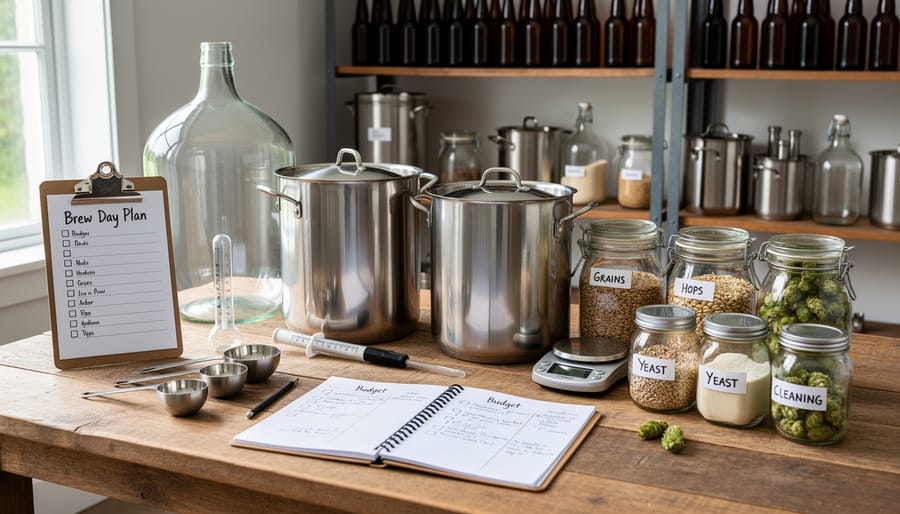
Every homebrewer remembers their first equipment purchase decision. Do you really need that $300 stainless steel conical fermenter, or will a $30 food-grade bucket do the job for now? This constant negotiation between wants and needs teaches financial discipline that extends far beyond the brew kettle.
Most brewers start with modest investments: a basic starter kit runs $100-150, enough to produce your first few batches. But the hobby has a way of expanding. Suddenly you’re pricing grain mills, temperature controllers, and kegging systems. Learning to prioritize these purchases builds a critical skill, distinguishing between what enhances your craft and what’s merely shiny.
The lesson intensifies when you track ingredient costs per batch. A five-gallon brew might run $30-50 in malt, hops, and yeast, making each bottle cost roughly $1.50-2.50. Knowing these numbers transforms how you approach the hobby. You begin asking: Can I afford to brew this imperial stout with expensive specialty malts this month, or should I stick to a simpler pale ale?
Smart homebrewers develop several budget management strategies naturally:
- Tracking ingredient costs per batch and calculating per-bottle expenses
- Setting quarterly equipment budgets and researching before major purchases
- Planning batch schedules around available funds and time commitments
- Identifying which upgrades genuinely improve results versus those that simply appeal to gear enthusiasm
- Building ingredient inventories during sales rather than impulse buying
This financial awareness creates a framework applicable to any leisure activity involving ongoing costs. The brewer who sets a monthly ingredient budget and sticks to it has already mastered the fundamental principle: decide your limits before you’re in the moment of wanting something. You’re creating boundaries when you’re thinking clearly, not when temptation peaks.
The practice of tracking expenses also reveals patterns. Maybe you notice you’ve spent $400 on equipment in three months but only brewed twice. That disconnect between investment and engagement signals something worth examining, whether it’s about brewing, collecting vinyl, or any other passion that requires financial commitment.
Recipe Integrity and Playing by the Rules
Every homebrewer learns this lesson early: the recipe exists for a reason. When you decide to skip the temperature hold during your mash, or ignore timing on hop additions, or substitute ingredients without understanding their properties, you create problems. The finished beer tells the truth about every shortcut taken.
Brewing demands respect for process. Temperature matters. Timing matters. The key beer ingredients interact in specific ways that chemistry dictates, not wishful thinking. New brewers who follow proven steps consistently produce better results than experienced brewers who wing it. The recipe provides guardrails, parameters that give you freedom to succeed rather than constraints holding you back.
This mindset carries weight beyond the brewhouse. Understanding that systems have structures for good reason, and that trying to game those systems typically backfires, shapes how we approach all rule-based activities. Whether you’re sanitizing equipment according to water prep rules or following guidelines in any structured leisure pursuit, the principle remains identical: boundaries exist to protect the experience, not diminish it.
Brewers develop what you might call parameter literacy, the ability to recognize that limits create better outcomes. Your fermentation chamber maintains 68°F not because someone arbitrarily chose that number, but because yeast biology demands it. Learning to work within those natural constraints rather than fighting them builds a particular type of discipline: acceptance that some boundaries cannot be negotiated away.
This translates directly to responsible recreation of any kind. When you’ve internalized that cutting corners ruins the beer, you understand viscerally that systems designed with thought deserve your respect. The rules aren’t obstacles. They’re the framework that makes genuine enjoyment possible.
The Community Connection: Accountability Among Fellow Enthusiasts
One of homebrewing’s greatest strengths lies in its vibrant, supportive community. Unlike solitary pursuits, brewing naturally draws people together through club meetings, online forums, competition judging, and brew days where experienced makers guide newcomers through their first batches. This built-in social structure creates what psychologists call “positive peer pressure”, a network where members hold each other to high standards not through judgment, but through shared enthusiasm for quality and proper technique.
When you post a photo of your latest brew to a homebrewing forum, fellow members will ask about your mash temperature, fermentation schedule, and sanitation practices. They’ll catch potential issues before you bottle, suggest improvements based on their own mistakes, and celebrate your successes as if they were their own. This ongoing dialogue keeps brewers honest about their processes and attentive to details that matter. Nobody wants to be the person who consistently cuts corners when surrounded by others who take pride in doing things right.
The accountability extends beyond technique to consumption patterns as well. The craft beer community has long embraced a culture of appreciative drinking rather than excessive consumption. Homebrewers share bottles to gather feedback, not to enable overconsumption. They discuss flavor profiles, process refinements, and recipe tweaks with the same analytical attention that naturally moderates intake. When your primary interest is understanding what you’ve created, you’re less likely to mindlessly consume it.
This community model transfers beautifully to any hobby. Whether you’re cultivating bonsai trees, restoring vintage motorcycles, or pursuing any leisure activity, connecting with fellow enthusiasts creates natural checkpoints. You discuss your time investment, your budget constraints, your latest challenges. These conversations provide perspective when passion threatens to overwhelm balance. Your brewing buddies will notice if you’re spending beyond your means or neglecting other responsibilities, and they’ll say something, because that’s what community members do when they care about each other’s wellbeing alongside their shared interest.
When the Hobby Becomes the Focus: Recognizing Healthy Engagement

Passion for any hobby enriches life, but crossing the line from enthusiasm to obsession happens gradually. Homebrewers often recognize this threshold when their basement becomes more familiar than their living room, or when every conversation somehow circles back to mash temperatures. The same self-awareness that tells you when you’ve brewed too many batches to actually drink applies equally well to any recreational pursuit.
Healthy engagement shows clear markers. Your hobby fits within your schedule rather than consuming it. You maintain connections outside your brewing circle and honor commitments to family, work, and other interests. Financial boundaries remain intact, you can cover your ingredient costs without stress, and you’re not dipping into funds earmarked for necessities. Most tellingly, you can skip a brew day without significant anxiety or irritation.
Warning signs emerge when these patterns shift. If you’re routinely choosing your hobby over previously important activities, that’s worth examining. Financial strain specific to hobby spending, buying equipment on credit, hiding purchases, or feeling defensive when someone questions the expense, signals imbalance. Physical indicators matter too, whether that means neglecting health considerations like thinking about beer and calories when sampling every batch, or losing sleep to squeeze in more hobby time.
Ask yourself honest questions periodically. Do you feel genuine enjoyment, or is participation driven by compulsion? Can you articulate what you get from the hobby beyond the activity itself, relaxation, creativity, community, learning? Would you describe your engagement to someone else without feeling defensive? These self-checks reveal whether passion remains healthy.
The brewing community has learned to find balance through shared experience. Fellow brewers notice when someone’s excitement tips into something concerning, and that collective wisdom extends beyond fermentation. Checking in with trusted friends about any hobby creates external accountability that complements internal awareness.
Balance doesn’t mean dampening enthusiasm. It means ensuring your passion serves your broader life rather than limiting it. The discipline you’ve built through patient brewing, knowing when to wait, when to intervene, and when to step back, applies directly to maintaining that healthy relationship with every pursuit you value.
Resources and Support: Building a Balanced Leisure Life
Building a balanced leisure life starts with recognizing that you’re never alone in your journey toward healthier habits. The homebrewing community itself offers an excellent first resource, local homebrew clubs, online forums like HomeBrewTalk, and subreddits dedicated to craft beer provide spaces where enthusiasts openly discuss not just recipes but also managing time, budgets, and passion without letting hobbies consume other life priorities.
Beyond brewing circles, organizations like the American Homebrewers Association offer educational resources that emphasize sustainable engagement with the craft. These platforms naturally promote moderation and thoughtful participation, mirroring the patience brewing itself requires.
For those concerned about any hobby crossing into problematic territory, the National Council on Problem Gambling operates a confidential helpline at 1-800-522-4700, while SAMHSA’s National Helpline provides free referrals for behavioral health concerns. Many communities also host recreational therapy groups that address healthy hobby engagement across all activities.
The craft beer world has long championed responsible enjoyment, brewers regularly promote designated drivers, tasting rather than overindulgence, and savoring quality over quantity. This culture of mindful participation extends beyond drinking itself to how we approach all our passions. Check in regularly with trusted friends or family members about your hobbies. Share your goals, budgets, and boundaries with someone who’ll hold you accountable. Balance thrives in community, whether you’re discussing mash temperatures or simply ensuring your recreational activities enhance rather than dominate your life.
The journey from grain to glass teaches us far more than just how to make beer. Through the careful, methodical practice of homebrewing, we develop essential life skills that extend into every corner of our recreational lives. The patience required to wait weeks for fermentation builds genuine discipline. The budget spreadsheets we maintain for equipment and ingredients train us in financial boundaries. The commitment to following recipes and respecting processes instills an understanding that rules exist for good reasons. The accountability we find within our brewing communities creates natural support systems that keep us grounded.
These aren’t just brewing skills. They’re the foundations of balanced, responsible living that apply whether we’re trying a new hobby, exploring entertainment options, or making any decision about how we spend our time and resources.
The craft beer community has always celebrated thoughtful enjoyment over mindless consumption. We gather to share knowledge, not to compete over who drinks the most. We invest in quality experiences rather than chasing cheap thrills. We take pride in the journey as much as the destination.
That measured, intentional approach to recreation stands as a model worth carrying into all aspects of our lives. The brewer who understands the value of patience, planning, and community support has learned skills that serve them well beyond the brew kettle. Cheers to that wisdom, and to the balanced life it helps us build.