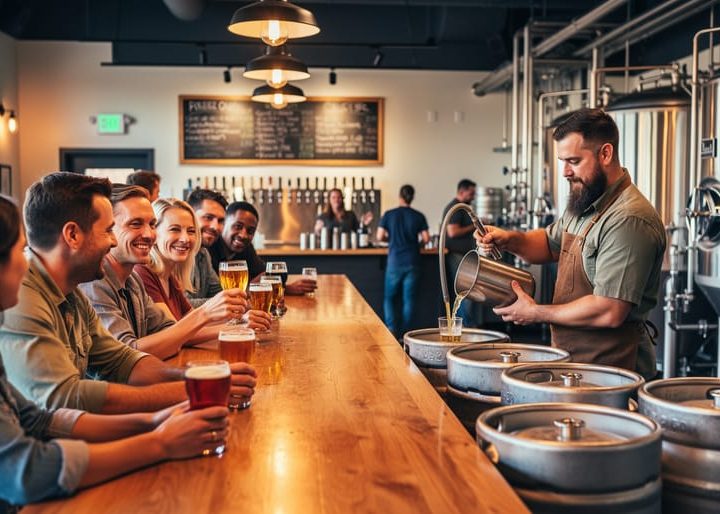
A brew community hour is a recurring, scheduled block of time when a brewery opens its doors for something beyond a pint: a shared activity that turns customers into neighbors. The seven formats below work because each one gives people a reason to show up, a way to take part, and a story to carry home. They’re repeatable too, which matters more than any single big night. A Tuesday walk-through that happens every month builds a regular crowd. A one-off festival builds a photo album.
We chose these formats with a few filters in mind. Each one needs modest staffing and no special licensing beyond what a taproom already holds. Each invites participation rather than passive attendance. And each one shows off what happens behind the brewhouse doors, from the grain bill to the people who haul it. You’ll find homebrewer open tap nights, brewhouse walk-throughs, spent grain and sustainability hours, local maker pairing nights, brewery history story hours, recipe development roundtables, and give-back gatherings.
Whether you run the taproom or just love sitting at the end of the bar, these are the formats that keep a neighborhood coming back, and each one comes with practical, behind-the-scenes detail you can borrow.
How We Chose These Seven Community Hours
Picking seven formats from the many a brewery could try meant setting a few ground rules first. We looked for hours that a taproom can run again and again without burning out the team, and that welcome people who may never have set foot in a brewery before. Here’s what each pick had to deliver:
- Repeatability: it can run weekly, monthly, or seasonally without heavy reinvention.
- Accessibility: guests need no brewing knowledge or special gear to join in.
- Local-artisan spotlight: it gives neighboring bakers, makers, and growers a place at the table.
- Knowledge sharing: people leave knowing something new about beer, brewing, or the neighborhood.
- Light footprint: it wastes little and, ideally, puts byproducts like spent grain to good use.
Worth saying plainly: this list draws on formats you’ll find across the craft brewing world, not on any specific named venue. Each one scales up or down, so a two-person taproom and a regional production brewery can both make it work. That matters even more with the ongoing beer sales decline when giving people a reason to gather counts for more than another pour.
One honest caveat. Every brewery sits in a different neighborhood with its own rhythms, regulars, and rules, so treat these seven as a starting point rather than a rulebook. Borrow what fits, tweak what doesn’t, and let your own community shape the rest.
1. Homebrewer Open Tap Nights: Where Hobbyists Meet the Pros
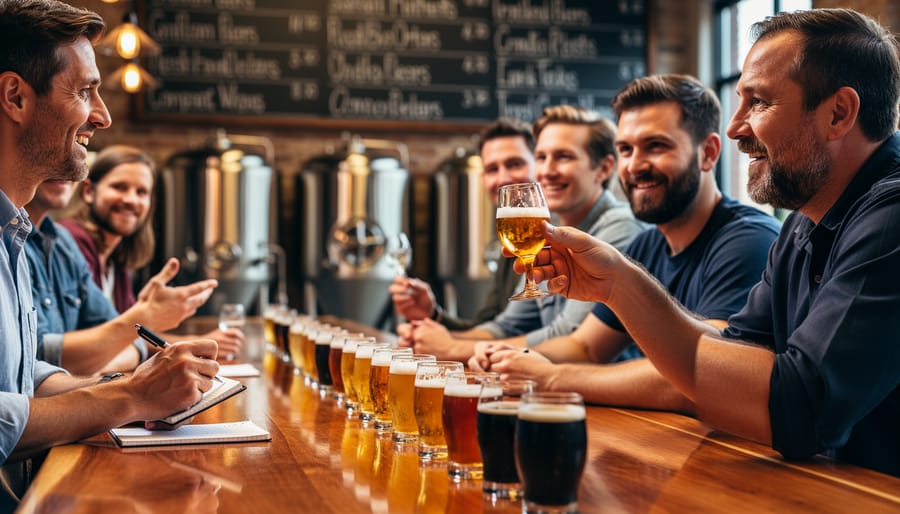
Picture a Tuesday evening in the taproom. Instead of the usual lineup, the taps are quiet and a folding table is crowded with growlers, swing-top bottles, and a few borrowed kegs. Homebrewers bring their latest batches to pour for neighbors, with a brewery staffer or seasoned brewer circulating to share friendly, honest feedback.
This works because it flattens the usual hierarchy. Hobbyists get a real audience and a professional palate. Brewers get a front-row look at what’s bubbling up in the local scene, which makes these nights a quiet talent pipeline. More than a few taproom jobs and collaboration brews have started with someone pouring a pale ale and asking, “Be honest, what do you think?”
Ask almost any professional brewer about their first real critique and they’ll remember it vividly: the diacetyl note they’d missed, the kind but direct “this one’s a little thin,” the tip that changed their next brew day. Paying that forward is part of the charm.
A few practical touches keep the night smooth:
– Sign-up sheet: Collect names, beer styles, and volumes ahead of time so you can plan the pouring order.
– Tasting notes cards: Simple prompts for aroma, flavor, and one thing to try next time keep feedback constructive.
– Clear serving guidelines: Set small sample pours, label each beer with its maker, and confirm what your local rules allow for serving homemade beer.
2. Brewhouse Walk-Throughs: A Morning with the Mash Tun
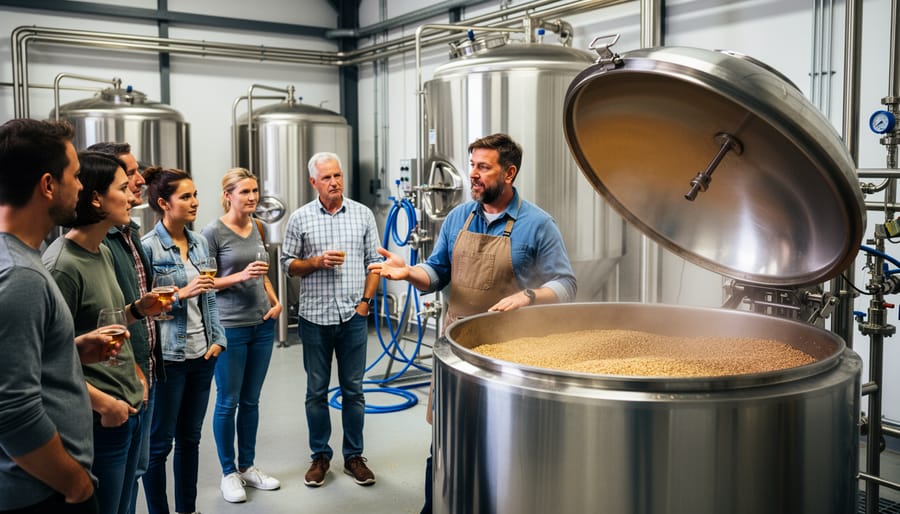
The best walk-throughs run small, maybe eight to twelve people, so everyone can hear the brewer over the hum of pumps. Start at the mill, where malted barley gets cracked open, then follow the grain’s path. In the mash tun, crushed malt steeps in hot water so enzymes turn starch into sugar. That sweet liquid is wort (pronounced “wert”), the unfermented beer-to-be. Lautering is simply the gentle rinse that separates the wort from the grain bed, and watching it happen makes the term click instantly.
From there, guests move to the kettle, the fermenters, and the packaging line. This is where the brewer’s storytelling shines: the batch that overflowed, the yeast strain that finally behaved, the reason dry hopping (adding hops to cool beer for aroma without bitterness) happens in the fermenter. Anyone who has nervously managed a first homebrew batch will love seeing those same steps at full scale.
It’s also a natural moment to show the unglamorous, hopeful side of brewing. Point out the heat-recovery setup, the water-saving rinse practices, and the bins of spent grain waiting for a local farmer or baker. Seeing the equipment up close makes every pint feel earned.
3. Spent Grain and Sustainability Hours: Closing the Loop with Neighbors
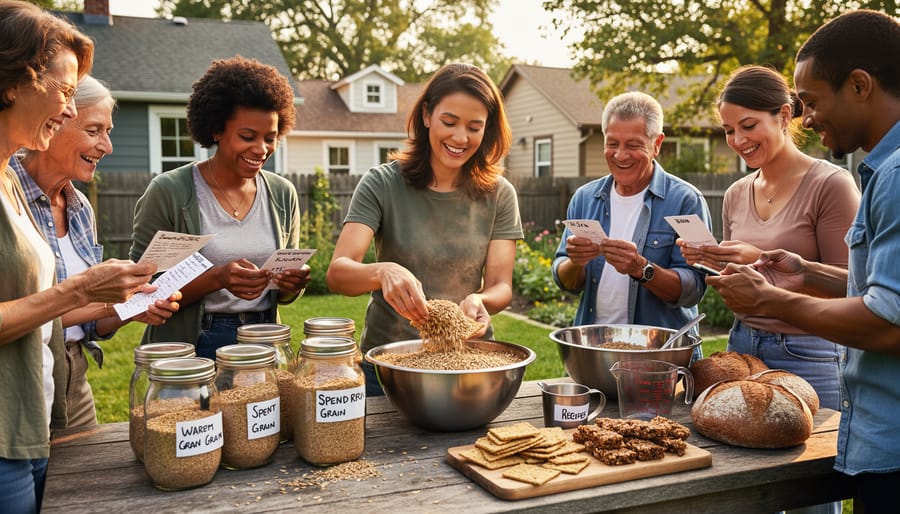
Every batch of beer leaves something behind. After the mash, a brewery can be sitting on hundreds of pounds of wet, sweet-smelling spent grain, and a Spent Grain and Sustainability Hour gives that byproduct a second life. Pick a regular window, say the first Saturday morning of the month, when neighbors can swing by the back door with a bucket and haul some home.
The bakers tend to show up first. Spent grain adds a nutty chew to sandwich loaves, pretzels, and crackers, and many will happily trade a warm loaf for a scoop of grain. Dog owners come for crunchy biscuit recipes, since the grain is a simple base for homemade treats. Gardeners take it for compost piles, where the moist grain breaks down quickly alongside leaves and kitchen scraps. Local farmers often collect larger loads as livestock feed, which keeps a lot of material out of the trash.
Grain spoils fast, so tell people to use it or freeze it within a day or two. A quick chalkboard note on pickup times and containers saves confusion.
The real magic happens in the lingering. Someone shares a granola recipe, someone else swaps tips on feeding chickens, and the brewer explains what the grain did in that morning’s mash. It’s sustainability that starts a conversation instead of a lecture, and it turns a leftover into a reason for neighbors to meet.
4. Local Maker Pairing Nights: Cheesemongers, Bakers, and Beer Side by Side
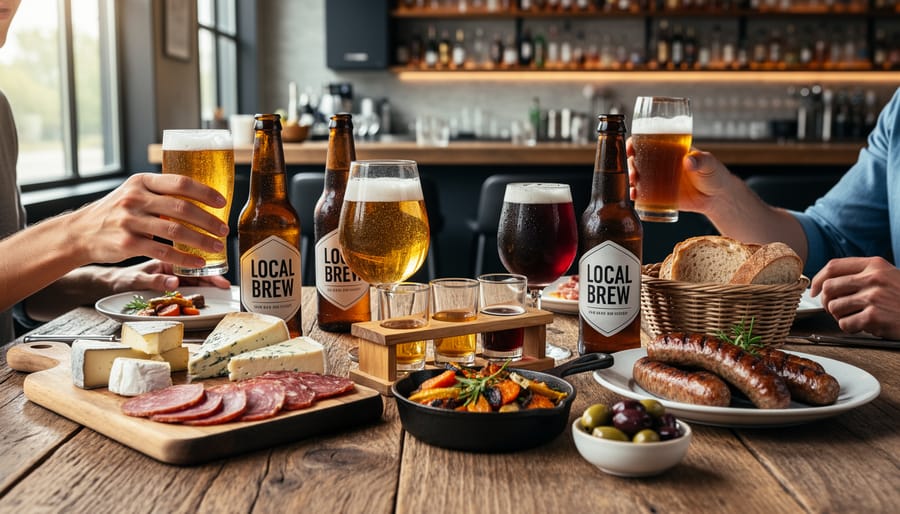
Local Maker Pairing Nights put the taproom’s long table to work. Invite a cheesemonger, a baker, a chocolatier, or a charcuterie maker from down the road, give them a corner, and let guests taste beer and food side by side. The beer gets a fresh context, and the neighbors who make the food get a room full of curious customers.
The logic behind a good pairing comes down to three moves, and none of them require a sommelier’s vocabulary:
– Contrast: Set opposites together so each shines, like a rich, creamy cheese against a crisp, bitter beer.
– Complement: Match shared flavors, such as roasted malt with dark chocolate or toasty bread.
– Cut: Let carbonation, acidity, or hop bitterness scrub the palate clean of fat and salt so the next bite tastes new.
Here are a few starting points to try, keeping in mind that every maker’s product is different:
- Saison with fresh chèvre, where peppery yeast meets tangy creaminess.
- Stout with dark chocolate, a complement built on shared roast.
- Pale ale with a sharp cheddar, where hop bitterness cuts through the richness.
- Amber lager with a soft pretzel or crusty loaf, echoing the malt’s bready sweetness.
The best part often happens off the menu. Let the baker or cheesemonger talk through why they chose each bite, and let your brewer do the same for the beer. Guests leave knowing a little more about both crafts, and with a new favorite shop to visit on Saturday morning.
5. Brewery History Story Hours: Hearing How the Neighborhood Got Its Beer
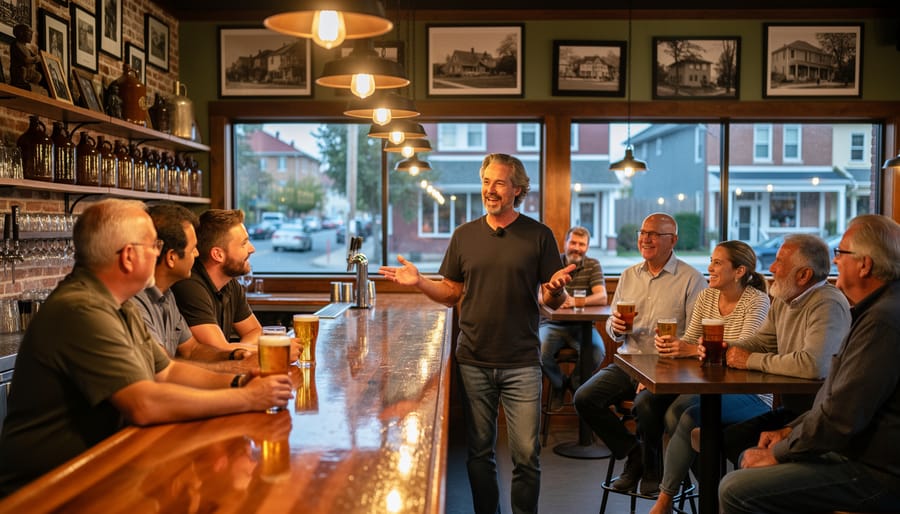
Every building has a past, and a taproom is often the best place to hear it. Brewery history story hours are recurring sessions where founders, longtime regulars, or a local historian pull up a stool and tell how the place came to be: what the building used to be, who took the first leap to open it, and how the city’s brewing heritage shaped what’s in your glass.
These evenings work because oral storytelling does something a plaque on the wall can’t. A founder describing the winter the roof leaked over the fermenters, or a regular recalling the corner tavern that stood here decades ago, makes the neighborhood feel like a shared project rather than a backdrop. Guests leave feeling like part of the story.
History also explains flavor. Regional traditions, from the water that ran through a river town to the grains local farmers grew, steered the styles we still pour today. A historian can trace why your city leans toward crisp lagers or malty ales, and that context makes every sip more meaningful. Pairing a story hour with a seasonal celebration like Canadian Beer Day gives the tales a natural audience.
To keep it simple, invite one storyteller per session, set out a few old photographs or labels if you have them, and leave plenty of time for questions. Let the room do the rest.
6. Recipe Development Roundtables: Co-Creating the Next Small Batch

Picture a quiet Thursday evening, a handful of regulars gathered around a table of small sample pours. In front of them sits a pilot-batch idea: a golden ale that could tilt toward citrusy hops, a touch of honey, or a more expressive yeast. That’s a recipe development roundtable, and it’s one of the most hands-on community hours a brewery can offer.
The magic starts with the pilot system. This is a small brewing setup, often a barrel or two in size, that lets a brewer test an idea without committing to a full production run. Guests can vote on hop varieties, an adjunct like oats or local fruit, or a yeast strain, and the brewer explains what each choice might do to aroma, body, and finish. It’s also a smart way to see how craft beer trends actually land with the people who drink in your taproom.
Behind the scenes, the real work comes afterward. A brewer reads the notes, notices which comments repeat, and separates personal taste from a genuine pattern. Maybe the table loved the hop aroma but found the bitterness sharp. The next test batch gets a gentler bittering charge and a later hop addition. After a round or two of tweaking, the recipe scales up to full size.
When that beer finally hits the taps, guests don’t just drink it. They remember their vote in it, and that sense of ownership keeps them coming back.
7. Give-Back Gatherings: Benefit Pours and Volunteer Hours
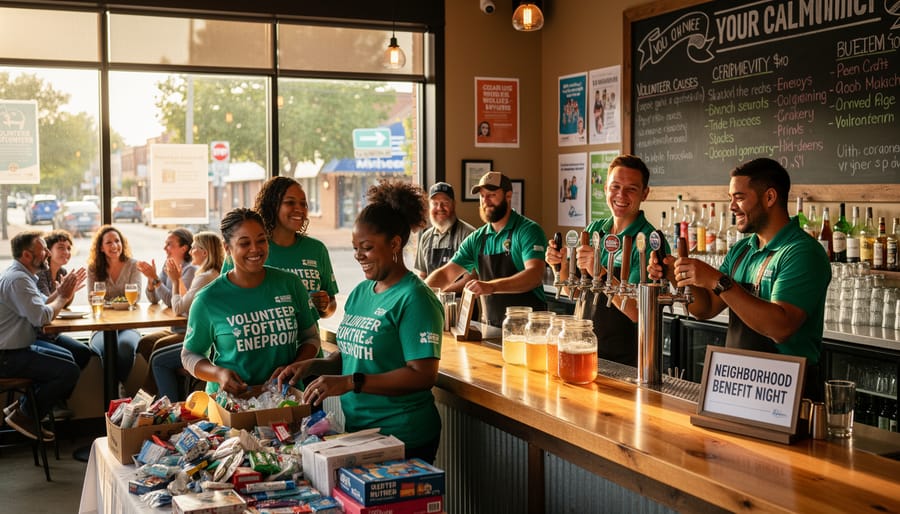
Some of the most memorable nights in a taproom have nothing to do with a new release. They happen when the whole room is pulling in one direction. Give-back gatherings put that into practice: a recurring evening where a set share of every pour goes to a neighborhood cause, or an afternoon where the brewery opens its doors for a shoreline cleanup, a food drive, or a volunteer shift.
The format works best when the partnership is real. Pick a local organization you already believe in, sit down with them before you announce anything, and agree on what the event will actually do for them. A food bank might need donated cans at the door. A watershed group might need hands and gloves on a Saturday morning.
Transparency is what keeps trust intact. Say plainly what percentage of sales is going to the cause, and share the final total afterward, even when it’s modest. Guests remember honesty far longer than a big number.
Keep the footprint light, too. Use reusable glassware, encourage guests to carry in their own bags for donations, and send spent grain to a local farmer after the event. If your community includes families or younger volunteers, daytime cleanups are an easy way to include them, since the evening pours stay tied to the legal drinking age.
Done consistently, these hours turn a taproom into something neighbors feel they belong to.
Common Questions About Starting Brew Community Hours
Starting small is almost always the right call. Here are the questions we hear most from brewers and homebrewers who want to try a community hour of their own.
How often should community hours run?
Pick a rhythm you can keep up, whether that’s monthly or even quarterly to start. A predictable slot, like the first Tuesday of the month, lets regulars build the habit and gives you room to improve each round.
Can a very small brewery host them?
Absolutely. A brewhouse walk-through or a spent grain pickup needs little beyond the brewer’s time and a few friendly volunteers, and neighbors often love seeing the real, scrappy side of a small operation.
Do homebrewers need a license to share beer at a meetup?
Rules vary a lot by location and by whether the beer is sold, poured at a licensed venue, or shared privately. Check your local licensing and alcohol regulations, and partnering with a licensed taproom for an open tap night can simplify things.
How do you keep events welcoming to newcomers?
Offer a friendly greeter, plain-language tasting notes, and non-alcoholic options. Explaining terms as you go helps first-timers feel like part of the crowd rather than guests at a members-only club.
Once you’ve settled on a format, getting the word out can stay simple. Post the date at the taproom and on your social channels, and ask neighboring bakeries, cheesemongers, and homebrew clubs to share it with their own customers. Personal invitations often outperform any poster.
As for knowing whether it’s working, watch for the quiet signals. Do the same faces return? Do guests bring friends, offer ideas, or linger to chat after the last pour? Those moments tell you more than any spreadsheet, and they point you toward what to tweak for next time.
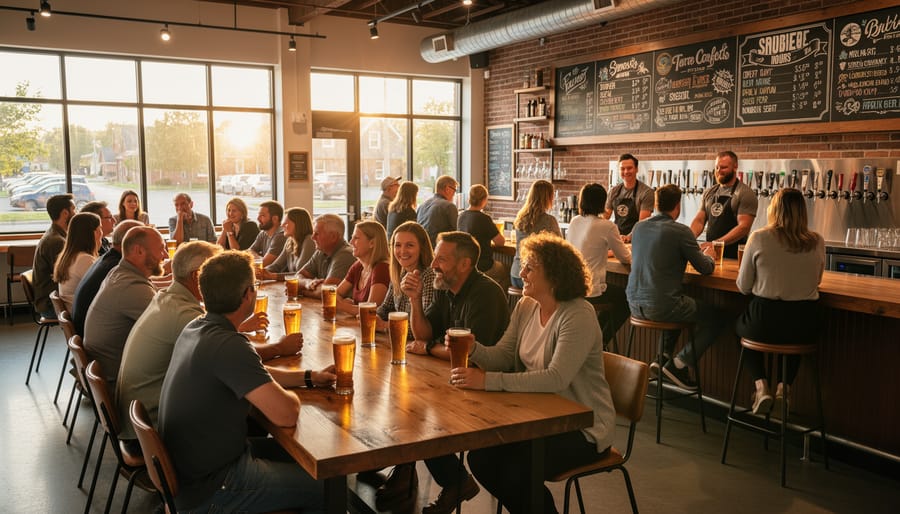
Final Takeaway: The Best Community Hour Is the One You Keep Showing Up For
Not one of these seven formats is the magic one. A quiet Tuesday story hour that happens every month will do more for your taproom than a splashy event you run once and never repeat. Consistency builds trust, curiosity keeps the conversation fresh, and your neighbors, from the baker down the street to the homebrewer with a cellar full of carboys, are what make the room feel like theirs.
So choose one hour this season and show up for it, whether that’s an open tap night, a walk-through, or a give-back evening. Then come tell the Craft Brew Collective community how it went. We’d love to hear who walked through your door.