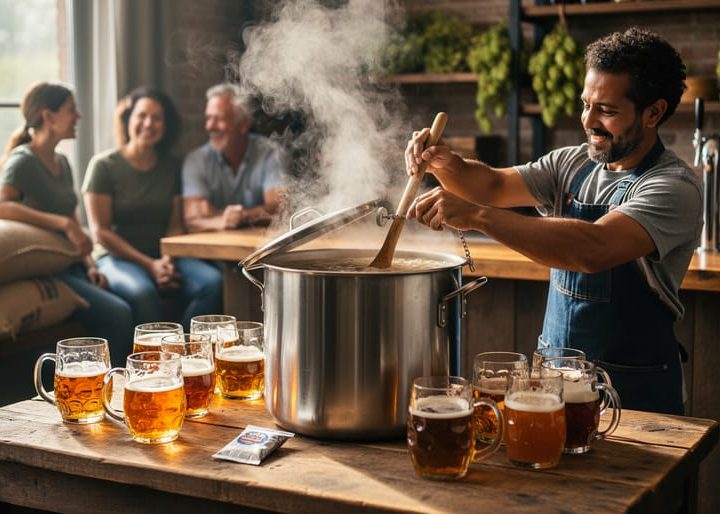
A craft community is the web of brewers, drinkers, growers, shop owners and neighbors who keep a local beer culture alive by sharing time, knowledge and hospitality with one another. It’s the homebrewer who hands a first-timer a spare packet of yeast, the taproom that hosts the neighborhood trivia night, the farmer whose spent grain finds a second life as bread or animal feed. Beer is the thread, but people are the fabric.
This matters because craft beer has never really been about the liquid alone. A great pint can come from a regional brewery with serious distribution or from a two-barrel system in a converted garage, and both owe something to the people around them: the mentors who shared recipes, the regulars who showed up on a slow Tuesday, the neighboring brewers who lent a hand when a pump failed mid-brew day. Sustainability grows from the same soil, since communities that trade grain, water-saving tips and returnable kegs waste less and last longer.
Below, we’ll look at how these communities form, how they function day to day, and how you can find your way into one, whether you’re pulling a tap handle or stirring a mash at home.
What a Craft Community Means in Brewing
Where the Idea Comes From
Brewing has never really been a solo sport. Long before anyone said “craft community,” villages shared brewhouses and passed ales hand to hand, because grain, fuel, and know-how were easier to pool than to hoard. The monastic brewing traditions of Europe added another layer, with brewers refining recipes and handing their methods down to the next generation.
Fast-forward to the homebrewing revival, when hobbyists traded recipes, swapped yeast, and critiqued each other’s pale ales around kitchen tables. Many of today’s craft breweries started exactly there, with friends who got serious about a shared passion.
A few terms help make sense of that thread:
- Craft community
- The network of brewers, drinkers, suppliers, and neighbors connected by a love of small-batch beer and local roots.
- Taproom culture
- The welcoming, neighborhood-living-room atmosphere of a brewery’s tasting space, where regulars and newcomers mingle.
- Collaboration brew
- A beer made jointly by two or more breweries, blending their ideas, ingredients, and techniques.
- Homebrew club
- A local group of hobbyists who meet to share batches, feedback, and brewing tips.
- Cooperative purchasing
- Brewers pooling orders for grain, hops, or supplies to cut costs and strengthen ties.
- Local sourcing
- Choosing ingredients and services from nearby farms, maltsters, and makers.
Each of these practices is the old village brewhouse spirit, updated for today.
How a Craft Community Comes Together
The People at the Heart of It
A craft community runs on people, and each one brings something different to the table.
Brewers and brewery staff are the obvious anchors. They make the beer, but they also set the tone, whether that means opening the brewhouse door to curious visitors or pouring a sample while explaining what went into the glass. Behind the bar, taproom staff become the friendly faces who remember your usual and point you toward something new.
Homebrewers keep the experimental spirit alive. Many of them swap recipes, troubleshoot stuck fermentations together, and push styles in directions a commercial schedule rarely allows. Plenty of today’s professional brewers started exactly here.
Then there are the regulars. They show up on slow Tuesdays and busy Saturdays, they bring friends, and they give honest feedback. A brewery without them is just a production space.
Farmers and maltsters supply the raw character of the beer, from locally grown barley to hops and fruit. Local food makers, such as bakers, cheesemongers and food truck cooks, round out the experience and often share ingredients and ideas in return.
Finally, event organizers stitch it all together, planning festivals, trivia nights and charity brews that give everyone a reason to gather. Take away any one of these roles and the whole network feels a little thinner.
The Spaces and Rituals That Hold It Together
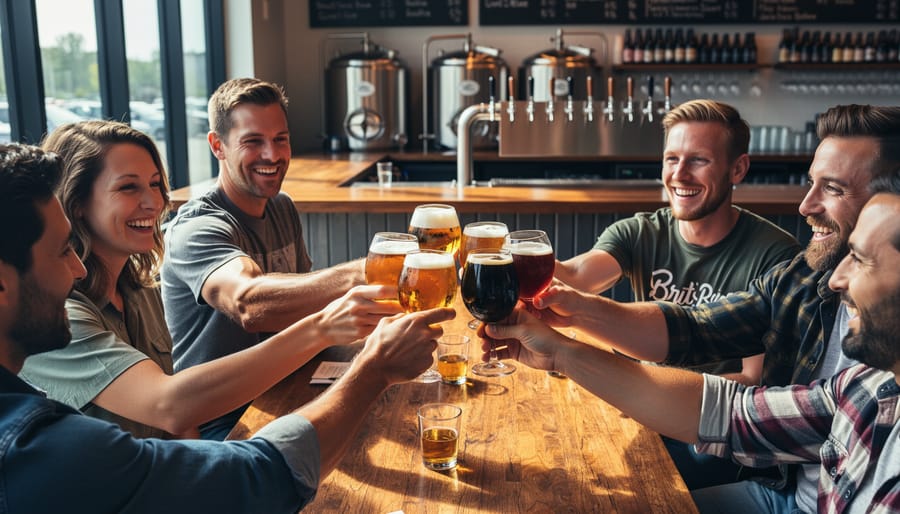
Some of the strongest bonds in craft brewing form in a handful of familiar spaces. The taproom is the obvious one, a neighborhood living room where regulars, first-timers and brewers share the same long tables. Many breweries now lean into this by setting aside dedicated taproom community hours for trivia nights, club meetups and quiet conversation over a pint.
Homebrew club meetings work a little differently. Members bring bottles to pass around, trade notes on a stubborn fermentation, and give each other honest feedback without any pressure. It’s where a first-time brewer learns what a diacetyl off-flavor tastes like, and where seasoned hands pick up new tricks.
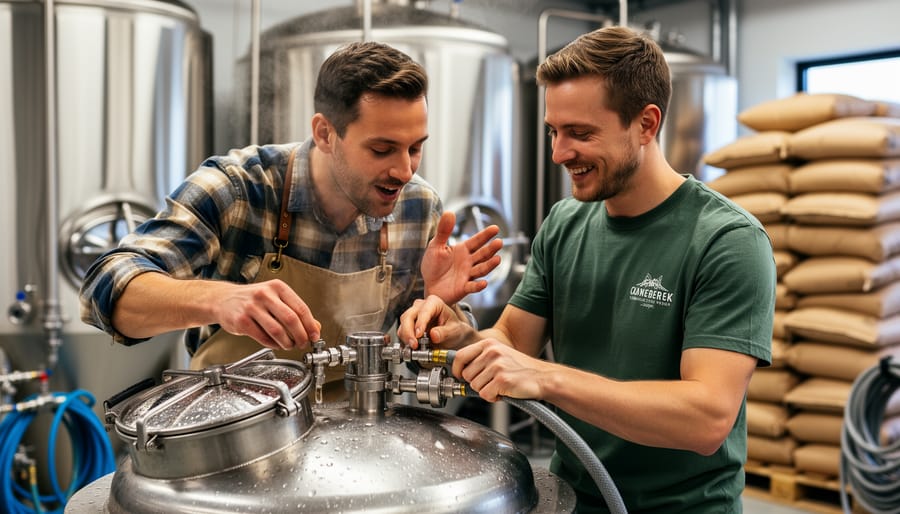
Then there are the shared events that mark the calendar. Collaboration brew days put two crews, or a brewery and a local farm, around the same kettle. Release-day gatherings turn a new beer into a small celebration, and tasting circles invite everyone to slow down, compare impressions and talk about what they’re actually tasting.
What ties these together is the ritual. Showing up, pouring for each other and swapping stories is how strangers become neighbors.
How Craft Communities Show Up in Everyday Brewing
Sustainability as a Shared Project
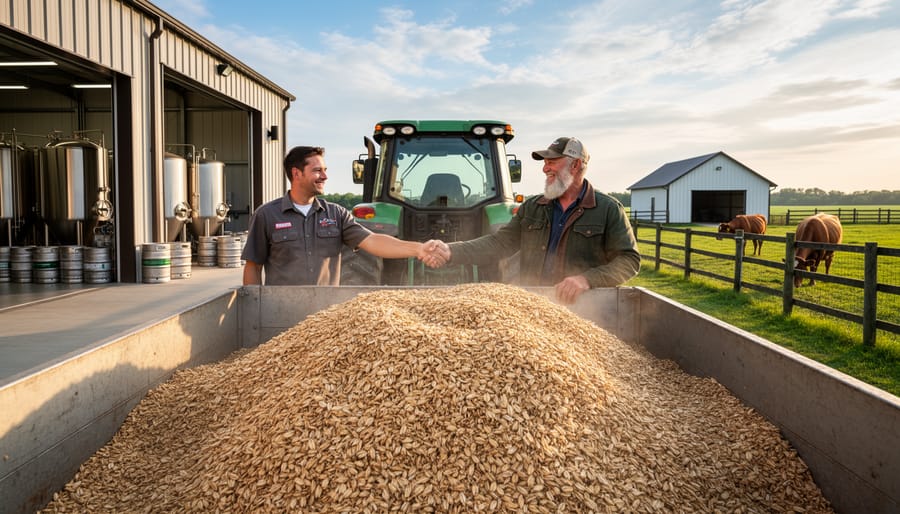
Sustainability in a craft community rarely starts with a brewery’s marketing plan. It starts with neighbors noticing what one another needs. A brewhouse ends each batch with a mountain of spent grain, and a farmer down the road has hungry livestock. A baker wants a deeper, nuttier flavor in a loaf. Suddenly a waste stream becomes a relationship, and that relationship tends to last.
The same logic runs through the rest of the supply chain. Breweries that source barley from regional maltsters, hops from nearby growers, and fruit from local orchards shorten the distance between field and glass, and they keep money circulating close to home. Reusable growlers and returnable kegs work the same way, because they only succeed when regulars actually bring them back.
Here are some of the concrete ways these values get put to work:
- Collaboration brews that pool ingredients, equipment and ideas across brewhouses.
- Spent-grain partnerships with farms, bakers and compost projects.
- Local ingredient sourcing from nearby maltsters, growers and orchards.
- Homebrew mentoring that passes practical, resource-smart techniques to newcomers.
- Neighborhood fundraisers that channel a release party into a local cause.
None of this belongs to a single brewery. Each piece depends on someone else showing up, which is exactly what makes it a community effort.
Joining and Strengthening Your Local Craft Community
Getting involved in your local craft community is easier than most people expect, and you don’t need a brewhouse of your own to start. The simplest first step is to become a regular somewhere. Pick a nearby taproom, visit often enough that the staff learn your name, and ask what’s pouring and why the brewer chose it. Curiosity is the currency here, and most brewers are delighted to talk shop.
If you brew at home, a homebrew club is one of the warmest doors into the scene. Members swap recipes, troubleshoot stuck fermentations, and pour each other’s experiments for honest feedback. Beginners are welcome, too. If you’re still planning your first batch, a club meeting is a great place to find someone who’s made every mistake already and will happily save you from repeating them.
Aspiring professionals can learn a lot just by showing up. Volunteer at a release day, join a collaboration brew day if one’s open to guests, or simply attend a tasting circle and listen. Share what you know, too. A technique you picked up from a failed batch might be exactly what another brewer needs to hear.
Then spread your support around the whole network. Buy from the local maltster or hop grower when you can, pick up bread from the bakery that uses spent grain, and show up for neighborhood events the brewery hosts. Every one of these small choices strengthens the web, and no contribution is too small. The first-time visitor and the veteran brewer both keep it going.
Common Questions About Craft Brewing Communities
Curious about how it all fits together? Here are a few of the questions that come up most often.
What counts as a craft community?
It’s any group of brewers, drinkers, suppliers and neighbors who share knowledge, support one another and care about small-batch quality and local roots. A taproom crowd, a homebrew club and a collaboration brew day all qualify.
Do I have to be a brewer to join?
Not at all. Regulars, curious first-timers, local food makers and event-goers are every bit as much a part of the community as the people stirring the mash.
How do larger commercial breweries relate to craft communities?
Many take part through collaboration beers, mentoring newer brewers and sourcing from local suppliers. Community-minded habits aren’t limited by size, and the whole scene benefits when they’re shared.
How can I find local homebrew clubs and events?
Start by asking the staff at your nearest taproom or homebrew supply shop, since they usually know who’s meeting and when. Bulletin boards, local social media groups and brewery event calendars are great places to look too.
Another question worth asking is why any of this matters for what ends up in your glass. When brewers swap techniques, borrow a hop idea from a neighbor or taste each other’s test batches, the whole scene gets better, and traditions get passed along instead of lost. If you’re curious about where the scene is heading, a look at current craft beer trends shows how much of it is driven by communities trading ideas and tastes. So pull up a stool and ask questions; most brewers love to talk shop.
At its heart, a craft community is a network of brewers, drinkers, suppliers and neighbors who share a commitment to small-batch quality, open knowledge and local roots. It grows from everyday habits: a brewhouse door left open, a mentor passing along a hard-won technique, a homebrew club swapping notes, a taproom that feels like the neighborhood’s living room. It deepens when people collaborate on a beer, send spent grain to a nearby farm, or show up for a release day just to be together.
That’s what makes community building so valuable in craft brewing. Great beer is only part of the story. The trust, generosity and shared effort around it are what keep local scenes alive and welcoming to everyone, from first-time visitors to veteran brewers.
So find your local spot, strike up a conversation, and bring a friend along. Raise a glass with your neighbors, because you’re already part of it.