

The beer industry in the USA is the full chain of businesses that grow the barley and hops, brew the beer, package it, distribute it, and put it in your glass, from a multinational brewery filling tens of thousands of cans an hour to a neighborhood taproom pouring what the brewer made that morning. It runs on a three-tier system that keeps producers, wholesalers, and retailers separate, and it supports farms, factories, trucking fleets, bars, and restaurants in nearly every community across the country.
Why does that matter to you? Because every pint you pour, homebrew, or order at your local sits at the end of that chain, and understanding how it fits together explains why your favorite brewery can sell at the taproom but needs a distributor to reach the grocery shelf. It also explains how jobs, taxes, and sustainability choices ripple outward, from spent grain going to local farms to water use inside the brewhouse.
We’ll walk through how the system works, who the players are (large commercial brewers and small craft makers alike, each with a real role), and how beer shows up in everyday life. Then we’ll cross the border and look at how Canada’s beer economy compares.
What the U.S. Beer Industry Really Means

When people talk about the beer industry in the USA, they mean the whole interconnected chain that turns grain, hops, water and yeast into a pint in your hand. At one end are the producers: large national brewers, regional breweries, craft breweries, brewpubs and contract brewers who make beer on someone else’s equipment. At the other end are importers, distributors and retailers who move that beer from the brewhouse to bars, restaurants, grocery shelves and taproom counters.
It helps to think of beer as three stories at once. It’s an agricultural story, rooted in barley and hop fields. It’s a manufacturing story, with brewhouses, packaging lines and cold storage. And it’s a hospitality story, played out in taprooms, ballparks and neighborhood pubs. Big brewers bring remarkable consistency and scale, while craft brewers bring creativity and a deep local connection. Both matter, and each makes the other stronger.
A few terms come up again and again, so here’s a quick glossary:
- Brewery
- A facility where beer is produced, whether it’s a massive national plant or a small neighborhood operation.
- Brewpub
- A restaurant or pub that brews beer on-site and sells most of it on the premises.
- Taproom
- A brewery’s own tasting room, where drinkers sample fresh beer straight from the source.
- Craft brewer
- Under the Brewers Association’s definition, a small, independent brewer with traditional ingredients and limits on annual production and outside ownership.
- Importer
- A business that brings beer made in other countries into the U.S. market.
- Distributor
- A wholesaler that buys beer from producers or importers and delivers it to retailers, a role shaped by the three-tier system.
Seeing the industry this way sets up a useful comparison. Canada’s beer economy runs on many of the same ingredients, brands and creative ideas, which is why the two markets are so worth exploring side by side.
How the American Beer Economy Works from Grain to Glass
The Supply Chain: Farms, Maltsters, Hop Growers and Packaging
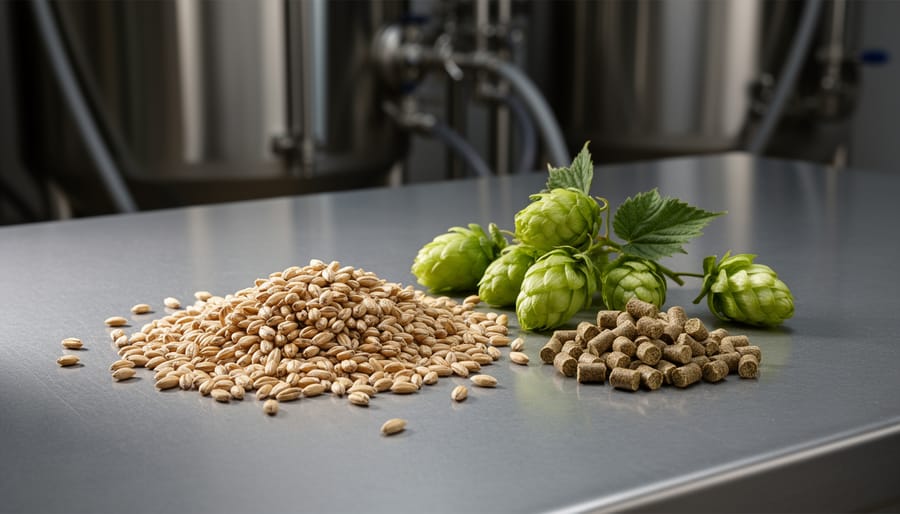
Every pint starts long before the brewhouse. Barley is grown on farms, then sent to maltsters who steep, germinate and kiln it into the malt that gives beer its color and body. Hop growers, concentrated in a few regions with the right climate, harvest and dry cones that supply bitterness and aroma. Yeast, often propagated in a brewery’s own lab or sourced from specialist suppliers, does the quiet, essential work of fermentation. And water, which makes up most of what’s in your glass, is treated and adjusted to suit each style.
Then comes the packaging side of the story. Glass bottles, aluminum cans and stainless kegs tie beer to other manufacturing sectors, and each has its own lead times and costs.
Behind the scenes, a brewery’s purchasing and production cycle is a balancing act. Brewers forecast demand, order grain and hops ahead, schedule brews around tank space, and time packaging runs so beer reaches shelves and taps fresh. A delayed pallet of cans can reshape a whole week.
Sustainability threads through all of it. Many breweries now recycle process water, hand spent grain to local farmers as feed, and invest in efficient boilers and heat recovery to cut energy use.
The Three-Tier System and Direct-to-Consumer Sales
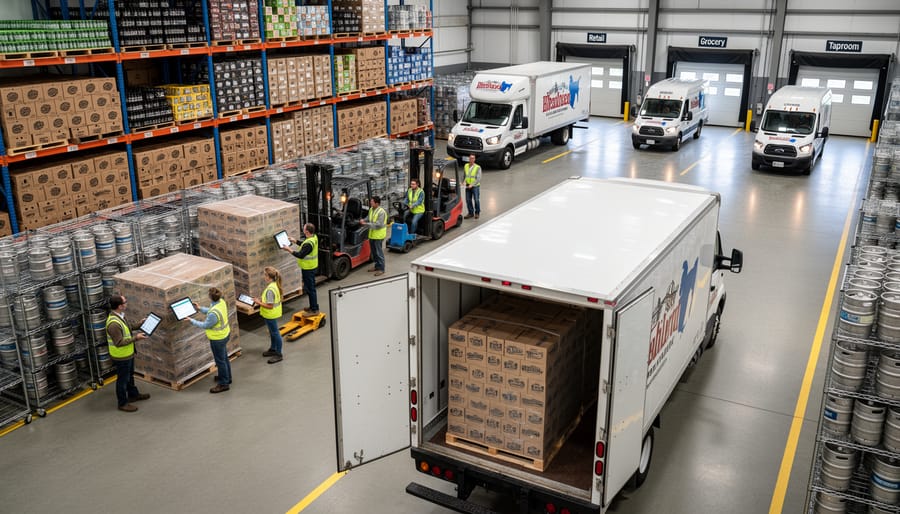
When Prohibition ended in 1933, the United States wanted to keep any one company from controlling beer from brewhouse to barstool. The answer was the traditional three-tier system, which keeps producers, distributors and retailers as separate businesses. Brewers make the beer and sell it to licensed distributors, who then deliver it to the bars, restaurants and shops that serve you.
That legacy still shapes the beer aisle today, but the details change a lot at the state line. Some states let breweries pour and sell right from their own taprooms. Others allow small brewers to self-distribute up to a set volume, while larger producers must go through a wholesaler. Each state writes its own rules, so a brewery that thrives in one place may need a different playbook just across the border.
North of the border, Canada takes a different path. Each province structures its own beer sales, often blending provincial liquor boards, brewery retail stores and private outlets. Neither approach is simply better. They’re different historical answers to the same question of how beer should reach drinkers.
Jobs, Taxes and Local Spending
A single brewery supports far more jobs than the people you see behind the bar. Farmers grow barley and hops, maltsters roast the grain, and equipment makers, packaging suppliers and truckers all depend on brewing demand. Distributors, retail clerks, taproom servers, event staff and local tourism operators round out the chain, and many of those roles stay close to home.
Taxes follow the same path. Federal and state excise taxes, along with sales taxes at the register, flow into public budgets that help fund roads, schools and community services. Breweries also spend locally on rent, utilities, repairs and neighboring businesses, keeping dollars circulating nearby. For the latest numbers, trade association reports are the best place to look.
Types of Players in the American Beer Landscape
Big Brewers, Regional Favorites and Craft Pioneers
Think of American beer as a team sport where every player has a position. The big national brewers bring scale and consistency. They buy grain and packaging in huge volumes, keep thousands of people employed, and make sure a familiar beer tastes the same in every town. Regional breweries sit in the middle, carrying local loyalties and distinctive styles that travel just far enough to feel like home. Craft pioneers push the boundaries, testing new hops, barrel-aged ideas and small-batch experiments that often inspire the larger players to follow.
Now picture a neighborhood taproom that opens in a converted garage on a quiet corner. At first it’s a handful of stools and a few house beers. Soon the regulars show up after work, a food truck parks outside on Fridays, and a trivia night fills the room. The brewery buys from nearby farms and hires neighbors to pour pints. Before long, that corner is busier, nearby shops notice more foot traffic, and the taproom has become both a living room for the community and a quiet economic anchor.
Imports and Cross-Border Brands
Imported beer is a steady part of the American shelf. Brands brewed overseas, and across the Canadian and Mexican borders, arrive through importers who then pass them along to distributors and retailers, following the same three-tier path as domestic beer. Canadian brews that cross into the States introduce drinkers to flavors shaped by a different regulatory and brewing culture. That back-and-forth is exactly where the two markets start to overlap, and it sets up the Canada comparison ahead.
How the U.S. Beer Industry Connects to the Economic Impact of Beer in Canada
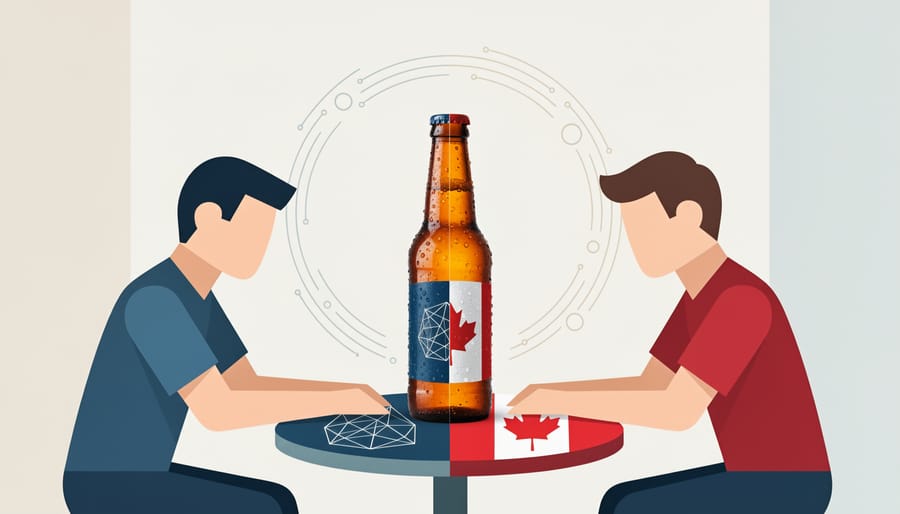
Trade Flows, Shared Ingredients and Cross-Border Brands
Beer crosses the Canada, U.S. border in more forms than most drinkers realize. Finished cans and kegs travel in both directions, but so do the things that make beer possible. Brewers on either side often buy from the same pool of suppliers, which means a shift in one market can quietly reach the other.
Looking at US beer sales data alongside Canadian figures shows how closely the two markets move together. The main points of overlap include:
- Barley, malt and hops sourced across the border.
- Aluminum cans, glass bottles and other packaging materials.
- Brewhouse equipment, from fermenters to canning lines.
- Brand distribution for imported and cross-border beers.
- Taproom and brewery tourism that draws visitors from both countries.
- Shared consumer trends, like the appetite for lighter, lower-alcohol options.
Because inputs and finished goods both cross the line, trade policy matters. Tariffs on packaging metals or equipment raise a brewer’s costs, while a swing in the exchange rate can make imported ingredients cheaper one season and pricier the next. Those pressures often show up on the shelf, so a small brewery’s pricing decisions can trace back to rules written far from its taproom.
Craft Culture as a Shared Economic Engine
Walk into a neighborhood taproom in Portland, Maine or Portland, Oregon, and then into one in Halifax or Calgary, and you’ll feel the same thing: a room built around conversation. Craft brewing has turned small brewhouses on both sides of the border into real small businesses, with local jobs, loyal regulars and a reason for visitors to plan a weekend around a flight of beer.
Brewers here love to swap ideas. Collaboration brews pair a Canadian team with an American one, each bringing a favorite yeast strain, a regional ingredient or a stubborn opinion about hop timing. Those shared batches send recipes, techniques and stories across the border, and every new release tells a local story. Many of these breweries also experiment with spent-grain reuse and water-saving habits, and they trade those lessons just as freely.
It’s a big reason that craft beer trends tend to travel fast, hopping from one region to the next. The result is a shared economic engine powered by pride of place and a genuine love of the pint.
Where the Two Markets Differ
Canada and the United States share a love of a good pint, but the systems that bring it to the glass are built differently. In Canada, beer regulation sits largely with the provinces, so the rules for who can sell, where, and at what markup can change as you cross a provincial line. In the U.S., regulation is split between federal rules and a patchwork of state laws, which is why a brewery’s options for self-distribution or taproom sales depend so much on its home state.
Retail models differ too. Many Canadian provinces rely on government-run or government-licensed outlets alongside private shops, while American shelves are filled through the three-tier system of producers, distributors and retailers. Then there’s sheer scale. The U.S. is home to thousands of breweries serving a much larger population, so a strategy that thrives there may not fit a smaller market. If you want a closer look at how Canadian numbers have moved, our breakdown of Canada beer statistics is a good starting point.
That’s why lessons rarely transfer neatly in either direction. Each market has earned its quirks, and brewers on both sides are working within them with plenty of creativity.
How the Industry Shows Up in Everyday Life and Brewing Culture
Walk into almost any American town and you’ll find the beer industry at work well beyond the pint glass. A brewery’s day usually starts long before the doors open: mash tuns heating, kegs getting scrubbed, a delivery of grain rolling in. Those routines ripple outward, feeding nearby restaurants, filling hotel rooms, and giving neighbors a reason to gather.
Here are the everyday touchpoints where that ripple shows up:
- Taproom visits that turn a brewery into the neighborhood’s living room
- Beer-and-food pairings, from crisp lagers with fried fish to stouts alongside chocolate desserts
- Homebrew supply stores where hobbyists swap tips over bags of malt and packets of yeast
- Brewery tours that pull back the curtain on fermentation and packaging
- Local festivals that bring makers, musicians, and food vendors together
- Spent-grain partnerships that send used barley to bakers and farmers
That last item is a favorite behind-the-scenes detail. After mashing, the grain still holds plenty of value, so many brewers pass it along as bread flour, dog treats, or livestock feed. Cooking with beer follows the same spirit: a splash in a batter, a braise, or a cheese sauce adds depth that wine or stock can’t quite match.
History lives here too. Many breweries set up in old mills, firehouses, and warehouses, keeping a town’s heritage standing while pouring something new. If you’re curious where to begin, our guide to taprooms and styles is a friendly starting point for your next visit.
Sustainability and the Future of Beer Economies
Brewers on both sides of the border are asking the same quiet question: how do we keep making great beer for decades, not just seasons? The answers tend to start with the things beer is made of. Water is the big one, since breweries use far more of it than ends up in the glass, so recycling rinse water and tightening cleaning cycles has become a mark of a thoughtful operation.
Energy and packaging follow close behind. Heat recovery in the brewhouse, efficient refrigeration and lighter, more recyclable cans and kegs all cut costs while easing the footprint. Then there’s the spent grain, once treated as waste, now headed to farms as livestock feed, into bakeries as flour and into dog treats and compost.
Local sourcing ties it together. Buying barley, hops and even fruit from nearby growers shortens supply chains, supports farming neighbors and gives a beer a true sense of place. Even in home beer brewing, you can reuse grain and conserve water the same way pro brewers do.
These habits aren’t trends so much as common sense, and they’ll shape how both countries’ beer economies endure.
Common Questions About the U.S. Beer Industry and Its Canadian Connection
Readers often ask the same handful of questions when they start exploring how American beer works and how it touches Canada. Here are some of the most common, answered in plain language.
What counts as a craft brewery in the U.S.?
Craft brewers are generally described as small, independent and traditional, with a focus on flavor and creativity. The exact definition is set by industry trade groups, so it’s worth checking their latest guidance if you need the precise criteria.
How does the three-tier system work?
After Prohibition, the U.S. separated producers, distributors and retailers so no one business controls the whole chain. Brewers sell to distributors, distributors sell to retailers, and states set their own rules, including whether taprooms can sell directly to you.
Why does the U.S. beer industry matter to Canadian brewers?
Our two countries share a border, ingredients, equipment suppliers and a love of craft. Trade policy, exchange rates and packaging costs on one side can ripple into pricing and planning on the other.
Do U.S. and Canadian brewers use the same ingredients?
Largely, yes. Barley, malt, hops, yeast, glass and aluminum move across the border regularly, though each brewer chooses what suits their recipes and local sourcing goals.
If you’re curious about up-to-date numbers, the best move is to check reports from brewers’ trade associations and government agencies on both sides of the border. They publish regularly, and they’ll give you a far more accurate picture than any static article can.
Behind every one of these answers is a simple truth: beer is a deeply local product that happens to sit inside a much larger system. The more you understand that system, the more you can appreciate the brewers working within it, whether they’re pouring pints in a small-town taproom or shipping cases across the country.
At its heart, the beer industry in the USA is a living chain: farmers growing barley and hops, maltsters and packaging makers, brewers of every size, importers, distributors and the retailers and taprooms where it all lands in your glass. Big national names bring consistency and scale, while regional and craft breweries bring invention and neighborhood pride. Together they support jobs from the field to the front of the house, and they feed public budgets along the way.
That story doesn’t stop at the border. Canada’s beer economy and America’s share ingredients, equipment, brands and ideas, and shifts in trade or costs on one side often ripple to the other. Both countries also share a craft culture built on small businesses, taproom gatherings and a love of local flavor.
So here’s a simple invitation: visit your local brewery, ask what’s behind the beer, and chat with the people pouring it. Try something from across the border next time. Every pint has a story, and following those stories is half the fun. Cheers to the growers, brewers and neighbors who make it all possible.