I need to count words to find position 200.
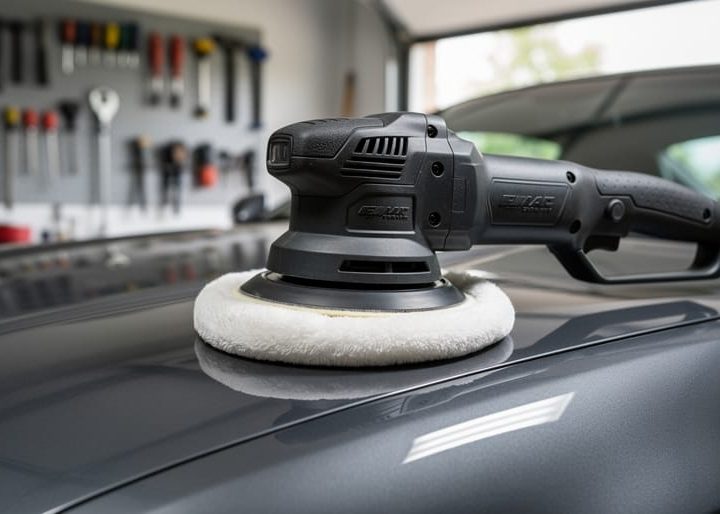
Paragraph 1: “For a weekend project car, buy a dual-action (random orbital) polisher.” = For(1) a(2) weekend(3) project(4) car,(5) buy(6) a(7) dual-action(8) (random(9) orbital)(10) polisher.(11). “It’s the forgiving choice for a first-timer, and it removes swirls and light haze without the paint-burning risk of a rotary.” = It’s(12) the(13) forgiving(14) choice(15) for(16) a(17) first-timer,(18) and(19) it(20) removes(21) swirls(22) and(23) light(24) haze(25) without(26) the(27) paint-burning(28) risk(29) of(30) a(31) rotary.(32). “Pair it with the right pad and polish, give yourself a Saturday, and you can bring a tired finish back to a deep, even shine in your own garage.” = Pair(33) it(34) with(35) the(36) right(37) pad(38) and(39) polish,(40) give(41) yourself(42) a(43) Saturday,(44) and(45) you(46) can(47) bring(48) a(49) tired(50) finish(51) back(52) to(53) a(54) deep,(55) even(56) shine(57) in(58) your(59) own(60) garage.(61)
Paragraph 2: “Think of it like your first homebrew batch.” = 8 words (69). “You don’t need the biggest rig on the shelf.” = 9 (78). “You need gear you can trust, a clear process, and a little patience.” = 13 (91). “A good machine polisher works the same way: the right tool makes the craft approachable, and the results show up fast.” = A(92) good(93) machine(94) polisher(95)…
Paragraph 3: starts after “fast.” Let me count the rest of paragraph 2: works(96) the(97) same(98) way:(99) the(100) right(101) tool(102) makes(103) the(104) craft(105) approachable,(106) and(107) the(108) results(109) show(110) up(111) fast.(112)
Paragraph 3: “Car and Driver’s tested roundup of car buffers, updated in September 2025, names Adam’s Polishes Swirl Killer the best overall, Avid Power Buffer the best budget pick, Chemical Guys TORQX the best for professional use, and Batoca the best cordless option.” Car(113) and(114) Driver’s(115) tested(116) roundup(117) of(118) car(119) buffers,(120) updated(121) in(122) September(123) 2025,(124) names(125) Adam’s(126) Polishes(127) Swirl(128) Killer(129) the(130) best(131) overall,(132) Avid(133) Power(134) Buffer(135) the(136) best(137) budget(138) pick,(139) Chemical(140) Guys(141) TORQX(142) the(143) best(144) for(145) professional(146) use,(147) and(148) Batoca(149) the(150) best(151) cordless(152)
Why Garage Hobbyists Love Polishing (and What It Has in Common with Brewing)
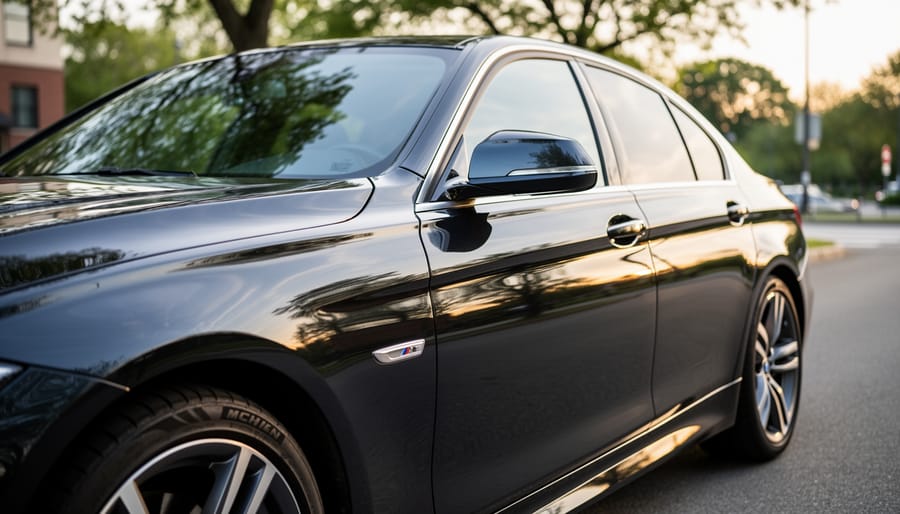
Anyone who has stood over a fermenter on a quiet Saturday already understands the pull of polishing. It’s slow work on purpose. You wash, decontaminate, tape off trim, then work one small section at a time, trusting that the process will pay off if you don’t rush it. Brew day runs on the same rhythm: prep, patience, and a few hours of unhurried focus that you’d honestly rather spend nowhere else.
There’s the same habit of cleaning as you go, too. Brewers sanitize everything that touches the wort. Polishers wipe down panels, swap in a fresh pad, and keep grit away from the paint. Skip that discipline in either hobby and you’ll see it in the result.
Then comes the reveal. Pull the tape, wipe the residue, and watch the light play across a panel that looked tired that morning. It’s the same quiet pride as pouring the first pint of a batch you made yourself. And just like at a homebrew club meeting, garage hobbyists love swapping tips, comparing results, and talking through what worked.
There’s a light sustainability angle here as well. One well-built tool and a few carefully chosen pads and polishes will serve you longer than a drawer full of cheap gear you keep replacing.
Key Buying Factors: What Actually Matters for a Weekend Polisher
Beginner-Friendliness and Comfort: The Forgiveness Factor
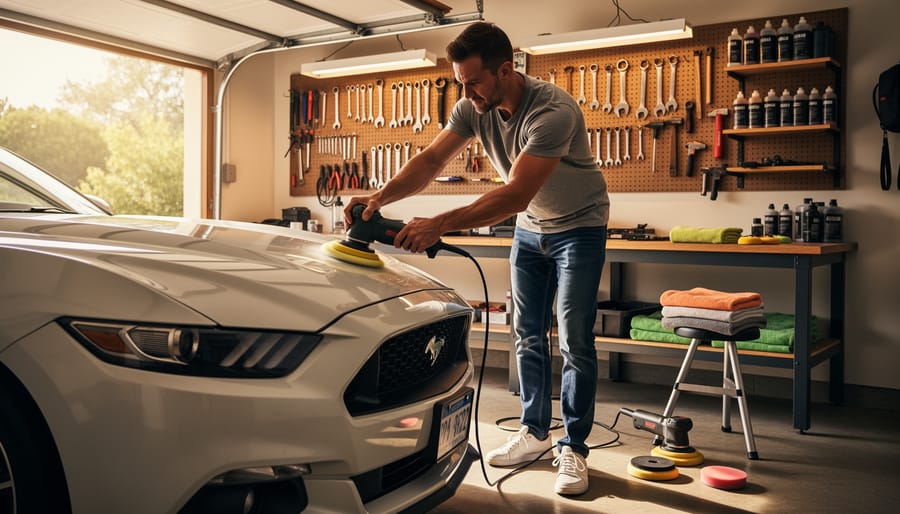
Dual action motion is the friendliest place to start. The pad spins and wobbles at the same time, so heat never builds in one spot the way it can with a rotary. Think of it like a gentle, steady simmer instead of a rolling boil: forgiving when you lose focus for a second.
Comfort matters just as much, because a polisher you can’t hold for an hour won’t get used. Weight, handle shape, and vibration all add up over a long session, and tired hands lead to sloppy passes. Car and Driver calls the Adam’s Swirl Killer robust, comfortable, and ergonomic, and notes its soft rubber handles reduce vibration and impact.
Here’s a quick checklist to keep in your back pocket, much like knowing the key ingredients before a brew day:
- Price and total cost of ownership
- Beginner-friendliness of the motion
- Pad size for coverage versus control
- Speed settings and range
- Power or wattage (a clue, not the whole story)
- Cordless versus corded convenience
- Comfort, weight, and ergonomics
Start with comfort and forgiveness, and the rest falls into place.
Pad Size, Speed Settings, and Power Explained
Pad size comes down to a trade-off between coverage and control. A bigger backing plate covers a hood or roof faster, but it’s harder to keep flat on curves and tight spots. A smaller one lets you work around mirrors, door handles and fender creases with confidence. For a weekend project car with all sorts of panels, starting smaller is usually the friendlier choice.
Keep in mind that Adam’s Swirl Killer is limited to five-inch pads, though Car and Driver notes it’s also available in 12-, 15-, and 21-inch versions if you want a bigger footprint.
Speed settings matter just as much. Many models offer six or seven variable speeds, often spanning a range of several thousand RPM. Lower settings are for spreading product and finishing gently, while higher ones suit heavier correction. Variable speed gives you room to learn without rushing. Start low, get a feel for the machine, and work up.
Wattage is the number most boxes shout about, but it tells you only how much electrical power the motor draws. It says little about how smooth the tool feels, how well it holds its speed under pressure, or how comfortable it is after an hour. Treat it as one small clue, not the deciding factor.
Cordless vs. Corded: Convenience Against Runtime
Cordless polishers make a lot of sense in a garage. There’s no cord dragging across your paint or snagging on a mirror, and you can walk around the whole car without hunting for the nearest outlet or an extension. For a weekend project car, that freedom can make a long session feel less like wrestling gear.
The trade-off is the battery. Cordless kits often come with something like two 21V batteries, which helps because you can swap one in while the other charges. Still, treat any runtime claim with caution, since it depends on your speed setting, pad, and how hard you lean on the tool. Car and Driver names the Batoca as its Best Cordless pick, a useful starting point if you want to go that route.
Corded models skip the charging routine entirely. Just confirm exactly what’s in the box before you buy.
Budget and Total Cost of Ownership
Think about price as the cost of the whole setup, not just the tool. The polisher is only the first line on the receipt. Pads wear out, and polishes and compounds run out faster than you’d expect, especially while you’re still learning what each one does. A cheap machine can quietly cost more once you start patching its gaps with extras.
Check what comes in the box before you buy, because included accessories vary from one listing to the next. One kit might bundle pads and a carry bag, while another sells just the bare tool.
Here’s the real trade-off: a mid-range polisher you actually enjoy picking up beats a bargain that sits in the corner after one frustrating Saturday. Like good brewing gear, the right tool is the one that gets used.
Types of Machine Polishers Compared: Dual Action, Rotary, and Cordless
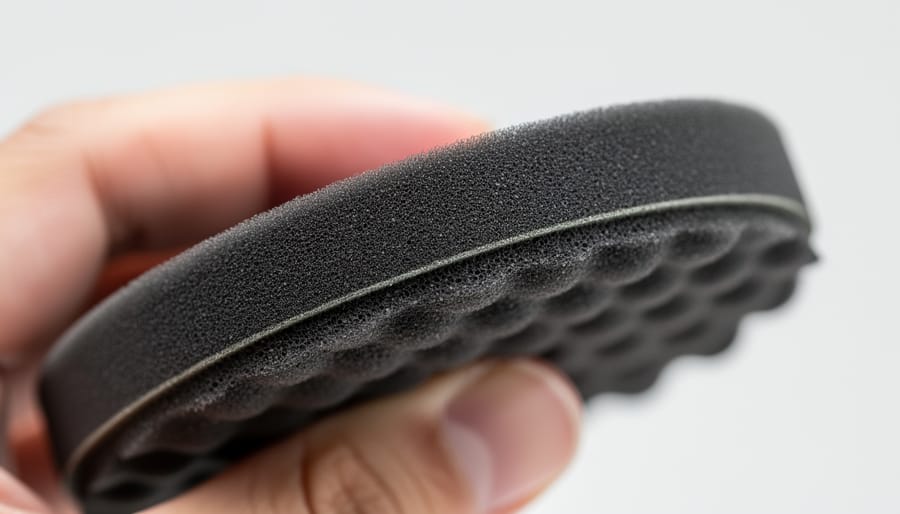
Three styles of machine polisher cover nearly every garage setup, and each one trades something for something else. Think of it like choosing between a forgiving session ale and a high-gravity imperial stout: both are worthwhile, but one asks a lot more of the person making it.
Dual action (random orbital) polishers spin the pad while also oscillating it, so heat and pressure don’t build up in a single spot. That’s why they’re the friendly option for first-timers. The risk to paint is low, the learning curve is gentle, and they handle swirls and light haze well. The trade-off is slower correction on deep defects.
Rotary polishers spin on a single fixed axis. That direct motion cuts quickly, which pros love, but it also generates heat fast and can burn through clear coat if you linger. It rewards experience and punishes hesitation, so it’s best saved for once you’ve logged some practice hours.
Cordless dual action kits give you the same forgiving motion without a cord trailing across fresh paint. The trade-off is battery life, so you’ll want to keep your charging habits as tidy as your garage.
| Polisher Type | Best For | Skill Level | Main Advantage | Main Limitation |
|---|---|---|---|---|
| Dual action | Weekend owners, swirl and light haze removal | Beginner | Forgiving, low paint risk | Slower on deep defects |
| Rotary | Heavier correction on neglected paint | Experienced | Fast, aggressive cut | Can burn paint if mishandled |
| Cordless dual action | Tight spaces, quick touch-ups | Beginner to intermediate | No cord to manage | Limited by battery charge |
None of these is the “wrong” choice. Car and Driver names a budget pick in the Avid Power Buffer and a professional-use pick in the Chemical Guys TORQX, which shows that real value exists at both ends of the price range. Match the tool to your skill, your projects, and how you actually spend your weekends, and you’ll end up with a polisher that earns its spot on the shelf.
Recommended Polishers by Type of Weekend Mechanic

Best Overall for Most Garage Projects
Car and Driver named the Adam’s Polishes Swirl Killer its Best Overall car buffer in its 2026 testing roundup, and it’s easy to see why it suits a weekend garage. The soft rubber handles reduce vibration and impact, which matters when you’re spending an afternoon working panel by panel. Car and Driver also notes a strong stick for pads, so they stay put while you work.
One limit to know up front: this model takes five-inch pads. If you later want something different, the Swirl Killer is also offered in 12-, 15-, and 21-inch versions, per Car and Driver.
For the hobbyist who wants a dependable, comfortable first serious polisher, this is the one to put at the top of your list. Check current availability and what’s included before you buy.
Best on a Budget and for Cordless Convenience
If you’re watching your wallet, Car and Driver named the Avid Power Buffer its Best Budget pick. That’s a sensible starting point for a weekend project car, since a modest tool you enjoy using beats a pricey one that sits on the shelf. Think of it like a first homebrew kit: you don’t need the shiniest setup to learn the craft.
If cords bother you, Car and Driver’s Best Cordless pick is the Batoca. Working without a cord trailing near fresh paint is a real comfort, especially in a cramped garage.
Cordless kits on the market often come with dual 21V batteries and several variable speed settings, which is what’s worth looking for in general. Spare batteries let you keep going while one charges, and variable speeds give you room to learn.
Before you buy, confirm current availability and exactly what’s in the box. Pads, batteries, and chargers vary by listing, and it’s easier to check up front than to discover something’s missing on a Saturday morning.
When to Step Up to Professional-Grade Gear
Most weekend polishers never need to leave the dual action lane. But some projects outgrow a hobby-grade tool, and it helps to know the signs before you spend more.
Car and Driver names the Chemical Guys TORQX as its Best for Professional Use pick, which tells you where it sits in the lineup: it’s built for people who polish regularly and expect their gear to keep up. That’s a different job from a Saturday-morning session on one project car. There’s no shame in either, and the companies making professional-grade tools deserve credit for building gear that holds up to heavy, repeated use.
So when does stepping up make sense? A few honest signals:
– Your projects are getting bigger. If you’ve moved from one daily driver to a full restoration or a string of cars, a tool designed for sustained work starts to earn its keep.
– Friends and club members are asking. Once you’re detailing for your car club buddies, you’re running more hours and more panels than a casual hobbyist, and durability and consistency matter more.
– You’ve outgrown the basics. If you can already read paint, pick pads with confidence, and know what a test spot is telling you, you’re ready to use a more capable tool well.
Think of it like a homebrewer moving from a stovetop kettle to a bigger system. You don’t do it because the old setup was bad. You do it because your batches, and your appetite, have grown.
A word of caution: don’t buy professional gear to skip the learning curve. A more capable tool rewards a practiced hand, and it won’t make up for rushed prep or skipped test spots. Build your routine first, then upgrade when the work genuinely calls for it.
There’s a sustainability angle here too. Buying one well-made tool that lasts through years of club-night detailing beats cycling through cheap replacements. Before you commit, though, confirm current availability and exactly what’s included in the box, since those details change and we can’t promise them here.
Mistakes to Avoid When Buying and Using Your First Polisher
Every garage hobbyist has a story about the lesson they learned the hard way. Most of us brew a bad batch before we respect sanitation, and most polishing newcomers make the same handful of errors. Here’s how to skip them.
Don’t shop on wattage alone. A big number on the box says little about how a tool feels after an hour in your hands. Comfort, vibration and balance decide whether the polisher leaves the shelf. Car and Driver, for instance, points out the soft rubber handles on the Adam’s Swirl Killer that reduce vibration and impact, and that’s the kind of detail worth weighing.
Watch your pad size, too. A pad that’s too large is harder to control around curves, edges and tight body lines. Start with something manageable, then size up once you’ve found your rhythm.
Resist the urge to grab a rotary on day one. It removes defects faster, but it rewards practice and punishes haste. A dual action machine lets you build confidence first.
Once you’re underway, don’t linger in one area. Work in small sections, keep the machine moving, and check your progress often. Patience beats pressure every time.
Finally, look after your gear. Clean pads as you go and rinse them thoroughly when you finish, much like sanitizing between steps on brew day. Clean pads can be reused, and a well-maintained tool lasts for years, which means fewer replacements and less waste. Swap stories with fellow hobbyists, too. Nearly everyone has a “here’s what I’d never do again” tale, and sharing them saves the rest of us a lot of trouble.
Polisher Buying Questions Answered
Here are the questions that come up most often at the garage bench, answered the way one hobbyist would tell another over a cold one.
Is a dual action polisher good for beginners?
Yes. Its random orbital motion is far more forgiving than a rotary, which is why we point most first-timers toward it. Car and Driver names the Adam’s Polishes Swirl Killer its Best Overall pick, and notes its soft rubber handles reduce vibration and impact.
Is cordless or corded better for a home garage?
It depends on your habits. Cordless means no cable dragging across fresh paint, but you’ll want charged spares for longer sessions. Corded keeps the power steady all afternoon.
What pad size should a first-time buyer choose?
Go smaller rather than larger, since a modest pad gives you better control on curves and tight panels. Check what sizes a model accepts before you buy.
Do I need a rotary polisher?
Probably not. Rotaries do aggressive correction in experienced hands, but a dual action covers most weekend projects with far less risk to your paint.
A couple of smaller questions deserve a quick word too. Wattage alone won’t tell you much, so weigh comfort, speed control and pad compatibility instead. And how do you know a tool is comfortable enough for a whole weekend? Hold it for a few minutes in the shop or garage. If your wrist, shoulder or grip already complains, it will be miserable by the third panel.
Whatever you choose, remember that results start well before the machine spins. Much like in the brewhouse, where prep matters long before the first pour, a clean, well-washed panel and a tidy workspace do more for your finish than any single feature. Treat the tool well, rinse your pads, and it will reward you for years.
In the end, the best polisher is the one that fits your hands, your garage, and your weekend rhythm. It’s the same logic behind brewing gear: the kettle you actually fire up beats the shiny rig that sits in the corner. If you’re still weighing options, the picks above are a solid place to start, whether you lean toward comfort, a tighter budget, or the freedom of cordless.
Before you buy, double-check current availability and exactly what comes in the box, since those details change from listing to listing. Then pick a small panel, take your time, and trust the process. Much like our first-batch steps for homebrewers, a patient start sets you up for good results.
Finally, share what you learn. Swap tips with fellow hobbyists, show off your project at a local meetup, and pass along the mistakes you made so the next person skips them. That’s how garage crafts grow, one weekend at a time.